Ukraine Update
Intro by Tom Cooper

Hello everybody!
Here we are: it’s already mid-April this year. The last weekend it was Easter for Orthodox Christians - and, that’s new: for the last two days, and nominally at least, there was a cease-fire in the War in Ukraine.
Negotiated by the UAE, and announced by Russia, this lasted 32 hours: from Saturday, 16.00hrs local time (13.00hrs GMT) until the last midnight (21.00hrs GMT). Zele reacted by proposing a longer halt of fighting - and has been turned down by Pudding: Moscow wants an overall settlement
Already by Sunday, 07.00hrs in the morning, local time, Ukrainians have reported just some 2,299 violations: the Russians blamed Ukrainians of mere 1,971 violations. As of this morning, Kyiv was crying about 7,696 violations (incl. 1,355 shellings and 6,226 drone attacks)…
With other words: actually, the war just went on. The principal difference to the last few weeks and months was that there were no major UAV- and missile attacks, and the two parties have exchanged 175 prisoners of war, plus lots of bodies, too.
Elsewhere, this weekend most of the EU (and much of NATO), plus Ukraine, were holding their breath for a different reason: because of elections in Hungary.
Meanwhile it’s sure: Orban not only lost, but Magyar’s Tisza Party has won two thirds majority. Which is ‘good’ because it’s enabling the new government to not only disable, but completely dismantle the system Orban, installed the last 16 years.
For Ukraine, it’s the fact that ‘Orban is out’ that matters the most. Foremost, this is opening the way for the EU to sponsor the government in Kyiv with €90 billion over the next two years: to keep it financially afloat.
…unsurprisingly, next to nobody is paying attention about something else.
By side that Orban - something like ‘IQ47’s spiritual father’ - lost, but the preceding election campaign in Hungary has nicely exposed few spicy details. Or at least it should have.
For example: the fact that not only IQ47 and Pudding, but also Netanyahu and his government have all positioned themselves on Orban’s side, and were meddling into Hungarian elections. Trying to influence them. I.e. that the anti-EU/NATO alliance is not limited to ‘some unimportant Hungarian politician plus his supporters in the USA and Russia, far away’, but is including Israel (and thus, and what a surprise: probably the ‘US/West’s ally’ UAE, too). Unsurprisingly, it’s not only that IQ47 dispatched his Vice to Budapest, or that Pudding made lots of promises and concessions: Netanyahu sent his son, his government openly endorsed Orban, and was closely monitoring etc…
Because I’m (quote) ‘insane’, and, definitely, a weird nerd too, this does make me wonder.
What do the people representing and supporting such behaviour - or at least ignoring it (which, actually, is including the majority of EU-governments, and the EU Commission) - then think about statements and positions of this kind?
Ah yes: it’s ‘anti-Semitic’ and/or anti-democratic and/or multi-polar-world and/or left-wing-sissy to post such a link… right?
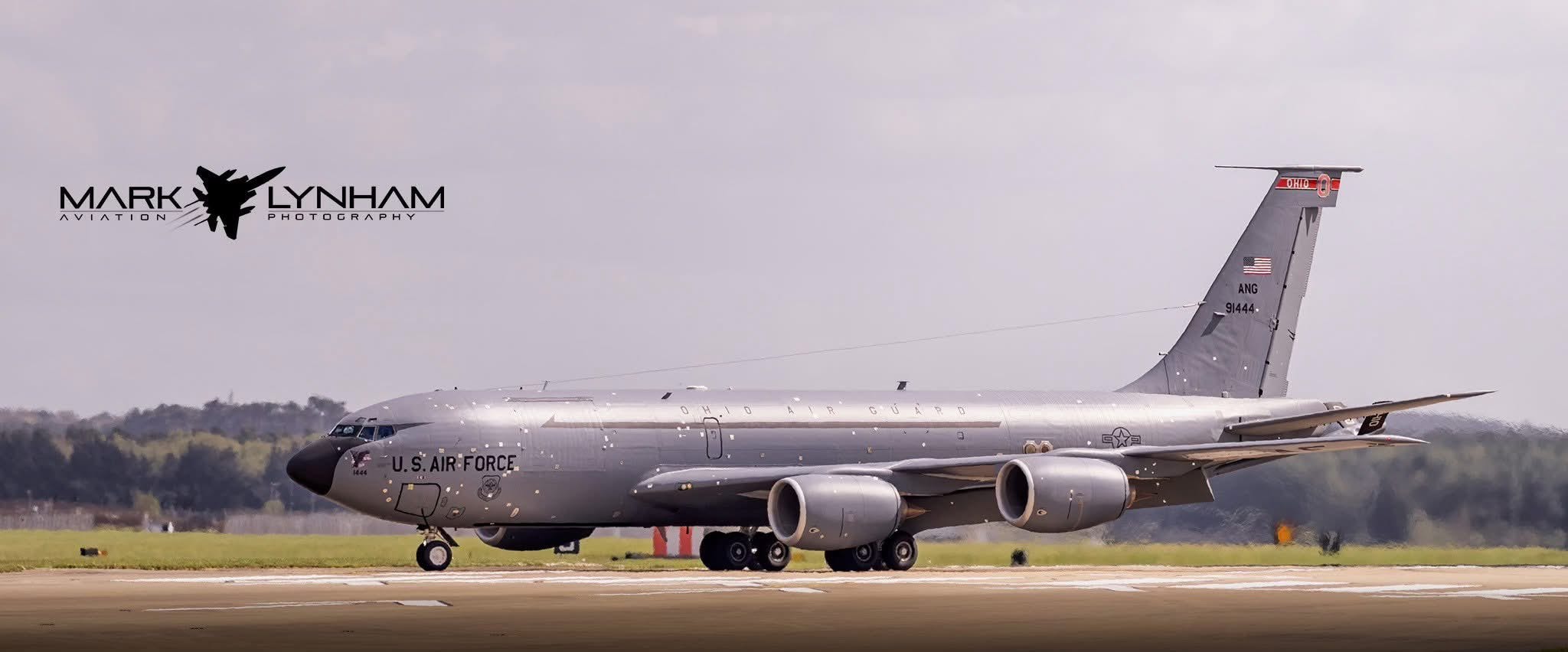
…hm… no idea why, but this is beginning to remind me of all those ridiculing the Russians when they empty their tanks- and artillery-boneyards to replace losses in Ukraine, but are not ridiculing the USA when this starts returning to service KC-135s stored at its own boneyards to replace… erm… it was no ‘losses’ - from the war with Iran…
Foremost, and obviously, I’m digressing: it’s entirely unimportant and totally irrelevant - foremost for Ukraine, not to talk about its remaining supporters within the EU (and NATO) - if the president of the USA, and the Prime Minister of Israel are openly cooperating with a Russian megalomaniac that’s running a war of extermination of Ukraine, or a wannabe-dictator blocking the EU’s €90 billion financial aid that’s aiming to keep Kyiv afloat for the next two years…
Only people entirely incapable of seriously analysing warfare would ever come to the idea to start connecting such dots.
Over to Don.
Sumy
The 15th Mobile Border Guard Detachment destroyed a howitzer and other positions.
A Ukrainian airstrike 8 km behind the front lines and a Russian airstrike 2 km behind the front lines.
Russian infiltrators moved 5 km towards Novodmitrovka.
Vovchansk
A Russian rocket launcher is detected while firing 17 km behind the front lines, which leads to its destruction.
Kupiansk
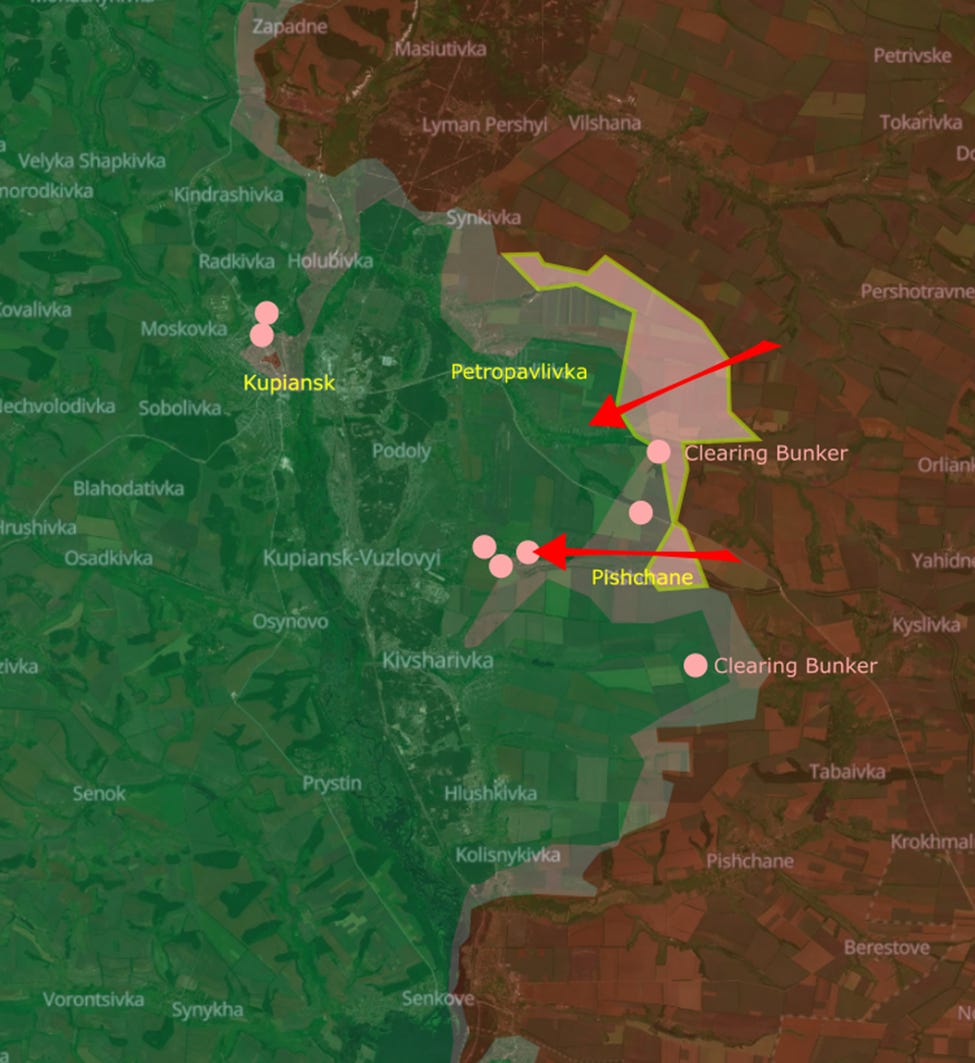
After advancing south of Pishchane last week, Russia advanced into the village and north of it this week,clearing bunkers along the way. It is ten kilometers from the front lines and the Oskil river. As the perimeter shrinks, it will become more difficult to defend east of the river.
Sloviansk
There is still movement in the 11th Corps area centered on Riznykivka, but Russian progress slowed.
10 km from the front, infantry from the 53rd Brigade shoot down a drone.
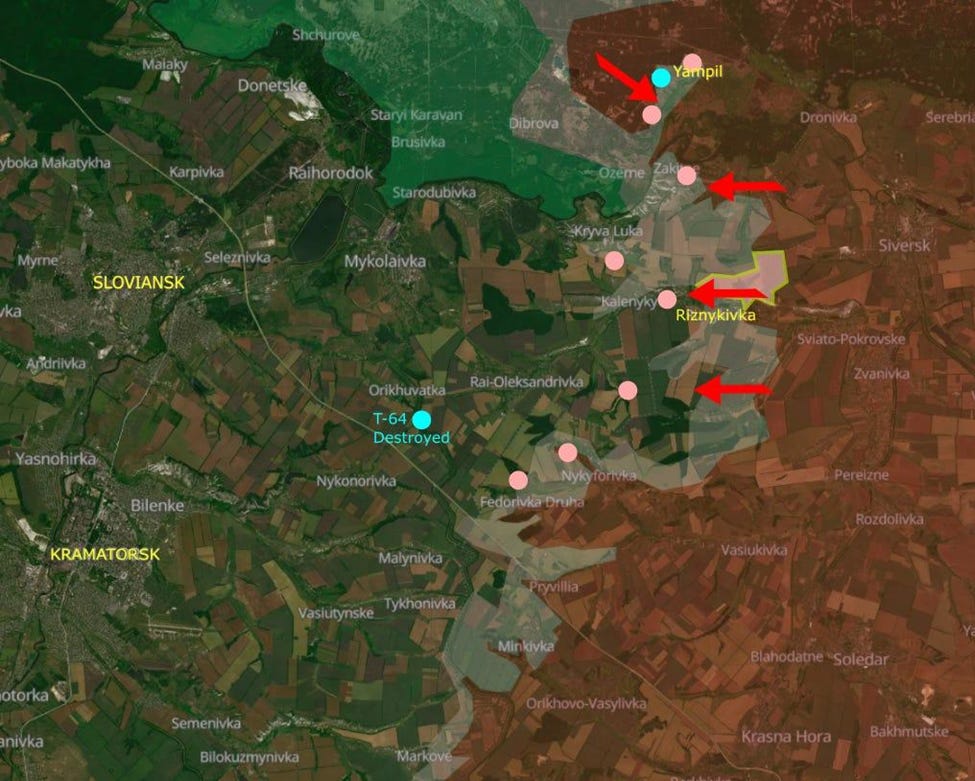
Despite constant Russian attacks, this sector had been stable for 30 months before it started unraveling. Seven months later, Siversk fell. The 54th Mechanized and 10th Mountain brigade commanders were relieved of their command for lying about the situation. The responsibilities of the 11th Corps were reduced to a smaller sector that included the 81st Airmobile Brigade, plus the 54th and 10th brigades. The 11th Corps commander, BG Serhiy Sirchenko, ordered the recapture of Siversk when it was clear that Ukrainian forces couldn’t even stop the Russian advance. In the four months since the fall of Siversk, Russia gained 8 km more.
Sirchenko blamed the brigade commanders for lying when he trusted them, but Russia advanced 10 km in seven months before the commanders were relieved. A competent superior officer should also have known exactly why the brigades were being pushed back that far for such a long time. Four months after the fall of Siversk, and amid the continuing Russian advance, he was relieved of his command of the 11th Corps.
Kostiantynivka
Engineers set up wire obstacles and detonate Russian mines with drones and charges. Rockets with cluster munitions and airstrikes hit Kostiantynivka often. Most of the anti-drone netting is destroyed just north of the city and a ground drone (UGV) is hit by a Russian drone. This is still better than a truck with a driver being hit. A civilian is killed driving a vehicle 800 meters north of the UGV. A UGV with a casualty is hit.
Multiple Russian infantry are hit and then a Ukrainian airstrike at the end. A Russian UGV is hit 4 km south of Pleshchiivka. Warehouses are hit 70 km behind Russian lines.
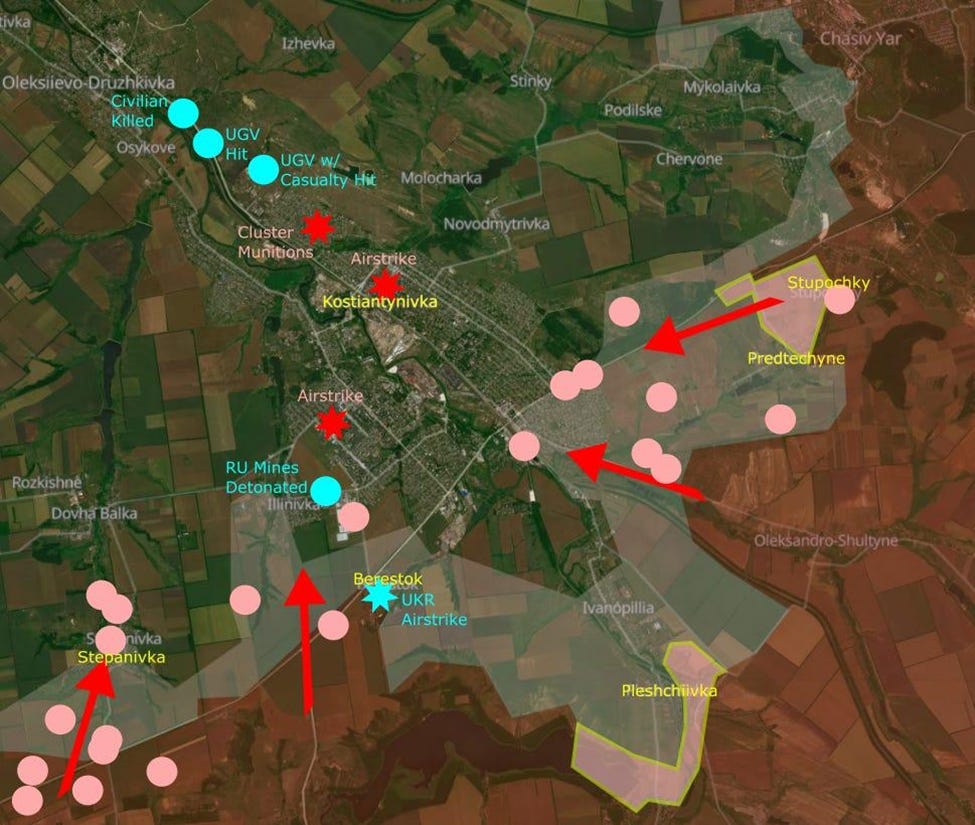
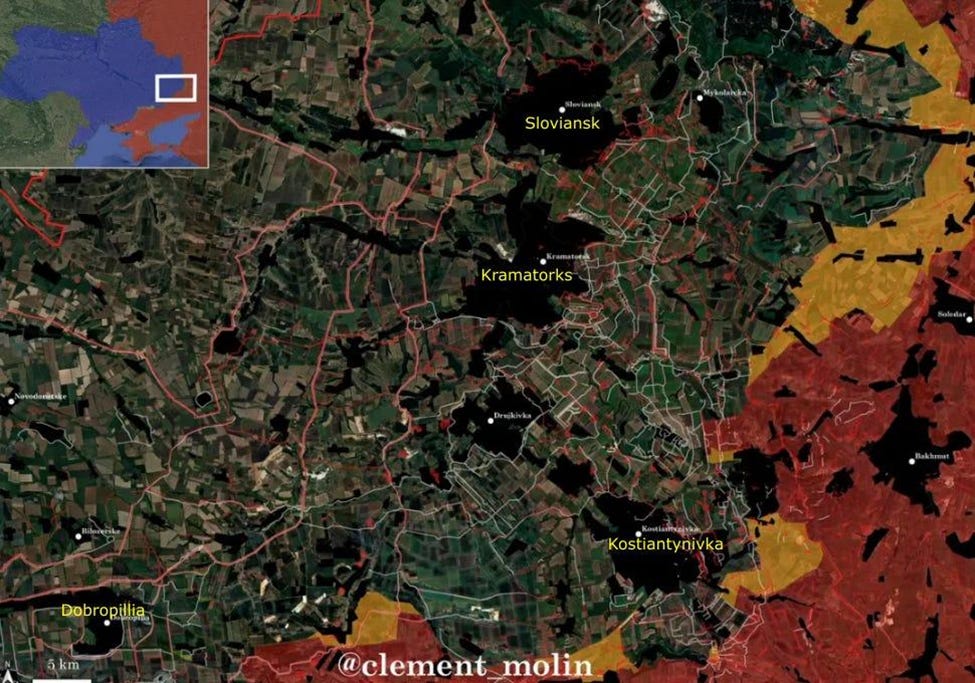
The new obstacle belts exist behind Soviansk, Kramatorsk and Dobropillia. There are some obstacles 8 km in front of Sloviansk and Kramatorsk, but none further east, which is why it is so hard to stop the Russian movement there. Kostiantynivka has a limited amount of obstacles, mostly wire, which is not as durable as trenches. To the west of Kostiantynivka, there are very few obstacles and Russia is making a push in that direction now. If Kostiantynivka was protected by the new obstacle belts, it would be very hard for the Russians to advance.
Pokrovsk
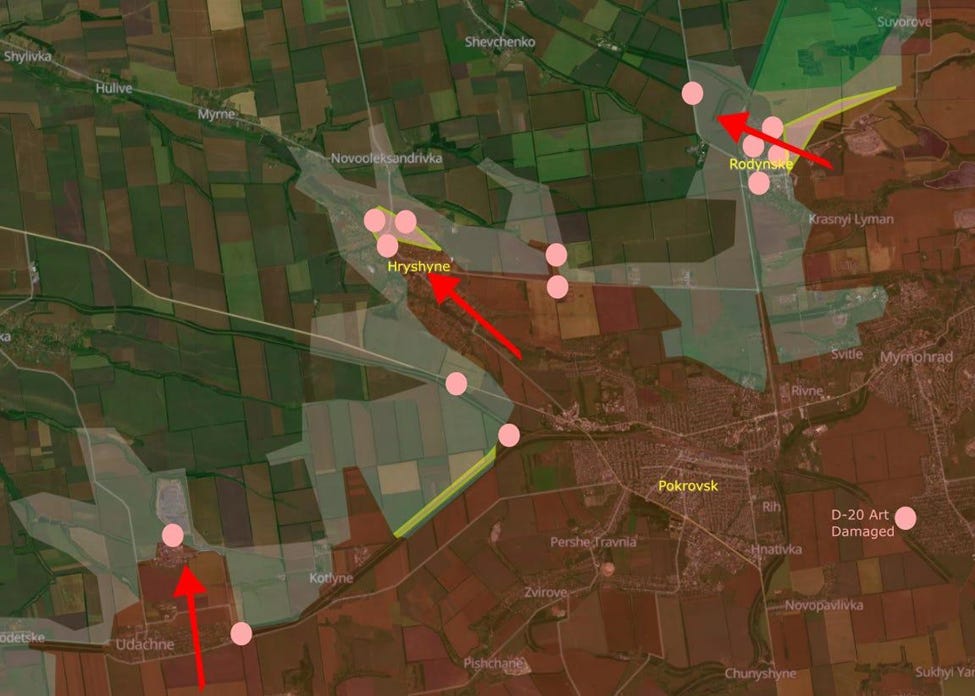
Three years ago the Russian would move across open terrain in vehicles, or through terrain on foot to reach Ukraine’s defensive positions. Since then, drones on both sides make moving across the open deadly, so Russian attacks tend to advance along terrain features, such as trees and buildings. This is reflected in the advances towards Hryshyne through the trees and buildings, and penetrations along the treelines.
Novopavklivka
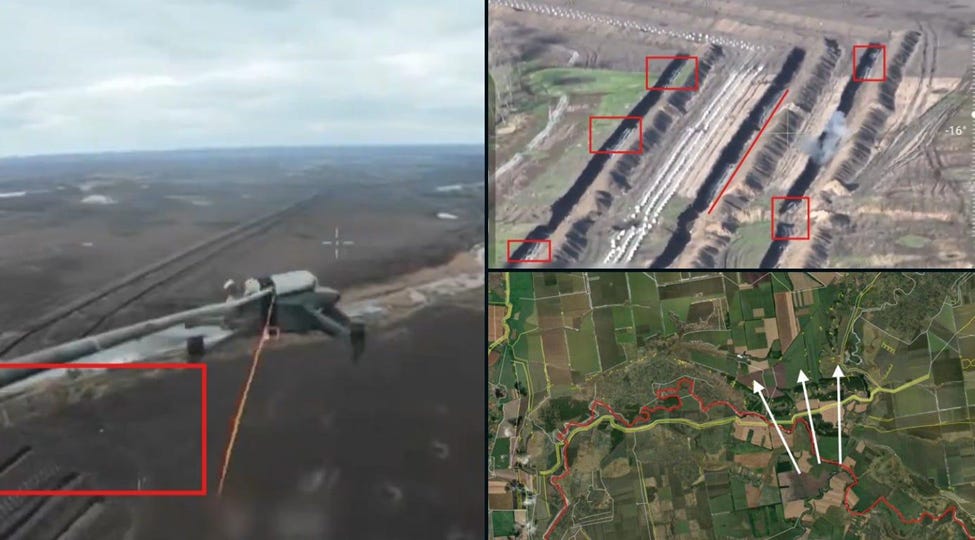
A Ukrainian drone with a stick and a string tangles the rotors of Russian drones and brings them down.

Huliaipole
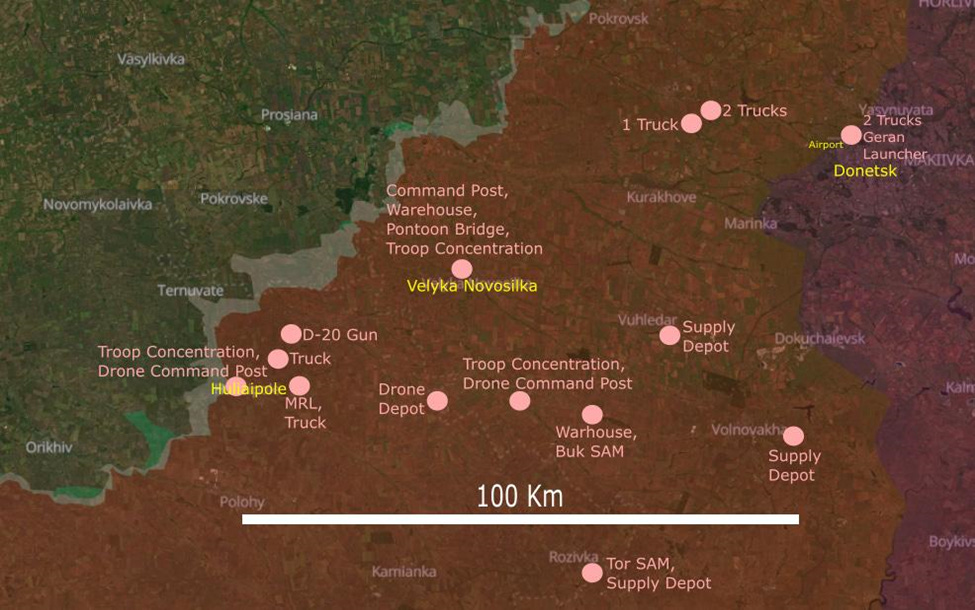
There was no reported change in territory, although the infiltration and attrition continued. This is a good time to show just a portion of the deep strikes that are taking place in this sector. Notice that the Buk and Tor air defense systems were guarding supply depots 60 and 80 km from the front, respectively. Both systems and the supplies they were guarding were hit.
The troop concentrations that were hit were all on major roads and in villages or towns. They also had command posts for troops or drones. Drone or supply depots were also hit.
These are just videos that were available to the public. It shows how Ukraine is trying to slow the movement of troops and supplies to the front with attacks with winged drones. FP-1 drones were used in many of these attacks. They have a 1600 km range with 50-120 kg warheads. At these short distances, they could all use 120 kg warheads if that was appropriate for the target.
With the rate of movement for infantry and supplies slowed down, there is more time for the FPV drones to take out the reduced rate of infiltrating Russian troops. Their attack will be more thorough with less chance of Russian infantry slipping through. If there were movement obstacles, Russian movement would be even slower.
Zaporizhzhia
The Russian UMPK attacks are persistent and widespread in many sectors of Ukraine. They hit a treeline in Zaporizhzhia, among other places.
The 422nd attacked two train engines. This was just one truck, but so many have been attacked, and this one was 70 km from the front lines.
Kherson
A Tor air defense system was attacked.
Occupied Territories
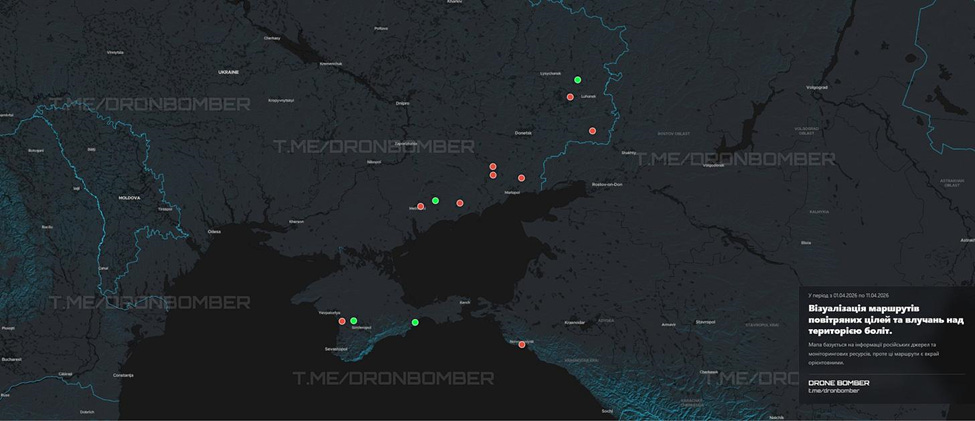
An oil terminal in Feodosia and a Buk air defenses system in Zaporizhzhia were attacked. An amphibious plane was attacked in Crimea. A train was attacked 60 km from the front. Ammo depots, repair bases and logistics hubs are attacked up to 150 km from the front.
A bridge was destroyed north of Oleskhy, Kherson. The last railway ferry transporting equipment across the Azov Sea was finished off.
Unknown Location
It is dangerous to drive a vehicle within 40 km of the front line. You don’t have to speak Ukrainian to hear the concern in their voices, but they came for the teammates anyway.
A Russian drone sat on a road in ambush. The Ukrainian stopped their truck and took cover behind a burnt out vehicle while firing at the drone. The drone flew by. The Ukrainians saw a mine while walking around but couldn’t start the truck to leave.
Russia
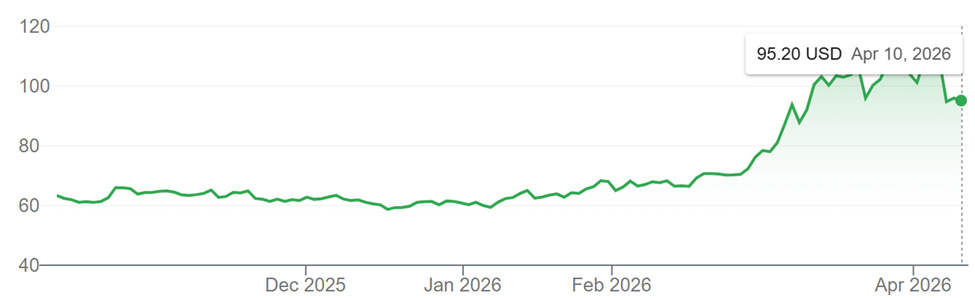
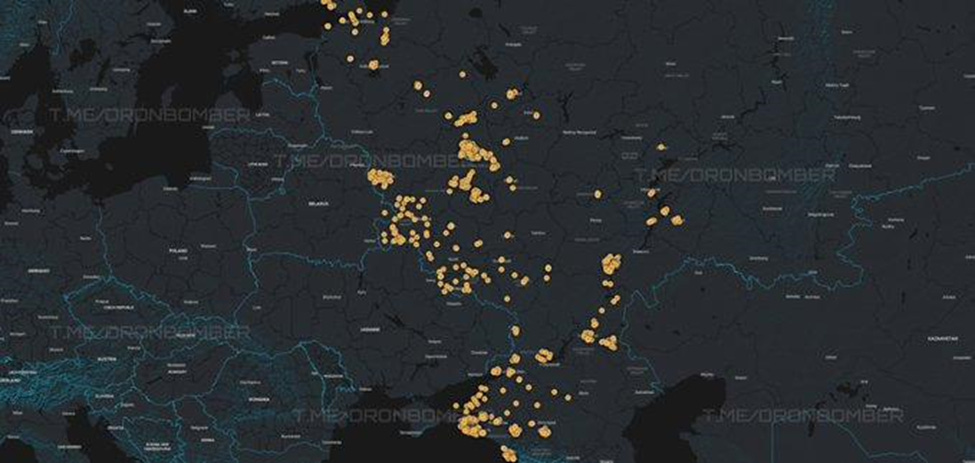
Ukraine kept Budanov’s promise of responding diplomatically to allied requests to stop bombing Russia’s capacity to export oil. After the latest attack on Novorossiysk, Satellite thermal signatures and imagery show the damage at the Sheskharis oil terminal. The frigate “Admiral Makarov” fires missiles in self-defense. The frigate is capable of firing Kalibr cruise missiles and was hit more than once. Besides the frigate, two terminal berths and two oil tanks were damaged. The Tinguta pumping station 20 km away was also attacked.
A pumping station south of Ust-Luga was hit. It provided electricity, heat and steam to the Kstovo refinery and other industries. The Ust-Luga port was attacked again.
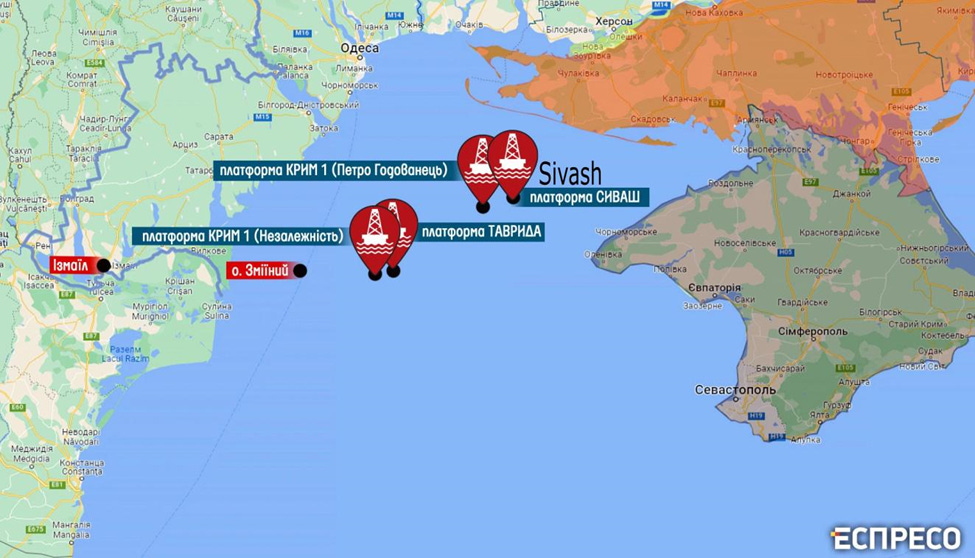
The Kstovo oil refinery was attacked. A pipeline in Krasnodar Krai was attacked. A pipeline pumping station in Tinguta, Volgograd, burned. A linear production dispatch station, which manages the flow of oil in a pipeline, was attacked in Krasnodar Krai. Two drilling platforms in the Caspian Sea were attacked.
The attack on the AlchevskMetallurgical Plant over a week ago damaged the key production facilities, blast furnaces, workshops, gas pipelines and energy infrastructure. The facility provided components to artillery and armored vehicles.
On the Pacific coast, a fire started in a shop of the factory that produces the Su-57. The shop was responsible for the polymer composite material components for ailerons, flaps, floor sections and outer wing tip fairings.
The chemical plant in Rossosh was attacked in December and again last week. The Minudobreniya chemical plant in Rossosh, Voronezh region burned.
A substation in Dagestan and Kstovo were attacked.
Russian oil and gas tax revenues dropped by 43% in March based on sales in February. Trump’s war on Iran drove oil prices higher in March. Multiple attacks on Russian export infrastructure reduced the volume of oil that Russia could export. Multiple Russian shadow tanker ships had been carrying oil they were unable to sell because of sanctions but Trump lifted the sanctions on those ships.
Russia has 368 military Antonov transport planes. 143 need repairs and the company responsible for repairs says Russia no longer has the industrial base, documentation or replacement parts needed to maintain the fleet.
***
Ukraine
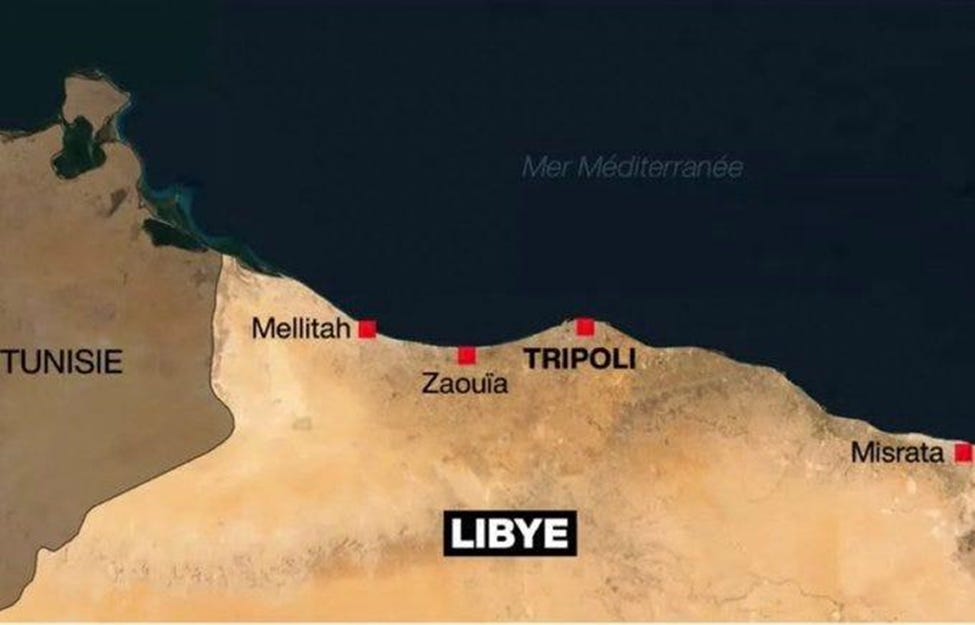
More than 200 Ukrainians are operating in Libya. They are based at a drone-launching facility in Zawiya, at a coordination center near the Tripoli airport, and the air force academy in Misrata that also has Turkish, Italian, US and UK forces. Libyan forces receive drone training and there may be arms sales and Ukrainian investment in Libya’s oil industry in the future.
A month ago, the Ukrainian government allowed companies to use reserve weapons and ammo to protect their facilities. The company defense specialists will be trained and certified and there will be rules for storing and using the weapons and ammo. They will operate as part of a unified air defense system under the military. One company already formed a unit and participated in combat. 13 other companies have been authorized to participate.
A manufacturing plant in Odesa was attacked.
The Bozhedsky Pokrovsky Monastery in Kharkiv was founded in 1635. Russia attacked it over a week ago. A week before that, the 17th century Bernardine monastery in Lviv was attacked.
When a bat’s home is destroyed in winter they can die because of depleted fat reserves, less insects and other food, and the cold. Some bats are brought to a shelter after the Russians destroy the buildings they were living in. They are kept in the shelter until the weather warms and are then released.
Diplomacy
When Russian tanks rolled into Hungary in 1956, they were greeted with chants of, “Russians go home!” Orban was greeted with those same chants at his election rally after it was revealed his foreign minister held conversations and passed EU documents to Russia’s foreign minister. The scene was repeated at a concert in Budapest on April 10th. In a conversation to Putin, Orban referred to a Hungarian fable when he offered to be a mouse to Putin’s lion and help him in any way that he could.
Vance arrived in Hungary and said he wasn’t going to tell Hungarians how to vote, then said they should vote for Orban. He said Orban was the most profound leader in Europe on the question of energy security and independence, even though it relies on Russia for 85% of its gas and 93% of its oil. And he said the seeds of the Ukrainian war were planted when European leaders decided to cut themselves off from oil and natural gas from the east, as if that was an excuse for war. Europe didn’t begin to look for oil and gas elsewhere until after Russia’s open invasion.
There were plans for a fake assassination of Orban, a fake attempt to blow up the TurkStream gas pipeline in Serbia, and widespread false internet stories created in Russia were all attempts to influence the election in Hungary.
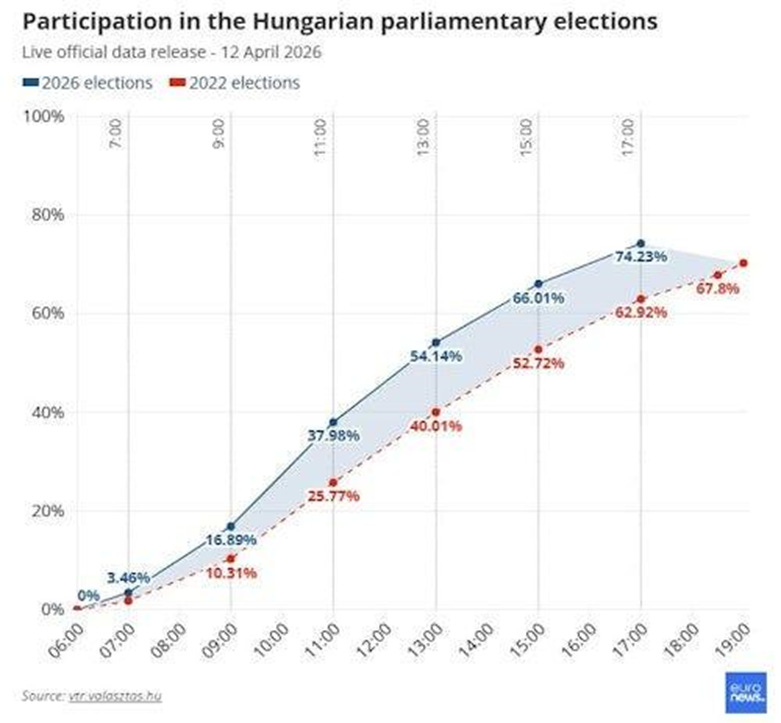
Orban conceded the election. The Tisza party reached a constitutional majority allowing it to roll back laws that damaged institutions. Magyar promised to be a strong ally in the EU and NATO.
***
Equipment
Russia used the Geran-5 drone for the first time in January 2026.
=Geran-2: 2,200 km range, 185 kph, 90 kg warhead, and a cost of $20-50,000.
=Geran-3: 600 km range, 330 kph, 50 kg warhead
=Geran-4: 850 km range, 500 kph, 90 kg warhead
=Geran-5: 950 km range, 600 kph, 90 kg warhead, over $80,0000.
The Geran 4 and 5 can be launched from an Su-25, which costs $55,000 to operate for one hour. This would extend their range.
Thank you so much. Net and Orban are best mates. Net went to the extreme right summit in 2025 in person.
Thanks Don