Ukraine Update
Intro by Tom Cooper

Hello everybody!
This time, my plot was simple: I take a ‘few days off’ - off the blog, not of working, of course - and don’t tell anybody.
It worked.
Kind of.
It worked for one war, not for another. You see, the disagreements over the opening hours of the Hormuz Strait are perfectly understanding - especially considering the USA have English as official language, and Iran the Farsi.
It didn’t work for a number of Russian oil facilities hit by Ukrainian attack UAVs, though, nor for the VSRF troops rushed to assault positions of the Ukrainian 24th Mechanised Brigade… where language differences have played a slightly lesser rolle, and which reminds me that, actually, the 24th was supposed to be destroyed by the Wagner PMC, at Popasna, back in April-May 2022…
Somehow, four years later, it’s the Wagner PMC that’s no more…. ironically so, considering all the efforts by the Russians. And by Syrsky.
Sigh… at least the War in Ukraine is still going on, and thus there’s still hope…
…or not? Thinking of it, it does appear as if there is no hope, simply because nothing works in warfare any more, doesn’t it?
See this: Pudding launched his 3-Days Special Military Operation in Ukraine, and this became a 4-years-war of attrition, with no end in sight. Then Zele & Syrsky launch a destruction of the Ukrainian Armed Forces - and the ZSU is still around. Then Babe destroys Hamas, and Hamas is still around. Then Babe destroys Hezbollah, and Hezbollah is still around. Then Babe prompts that clueless IQ47 to launch his 3-Days Special Military Operation, and not only is the IRGC still around, but IQ47 can consider himself happy to extricate out of the resulting fracas with some sort of a cease-fire. No end of the crisis, though. Nor of the IRGC. Even more so because Babe’s hordes - regardless how exhausted - continue enthusiastically genociding Palestinians, and bombing southern Lebanon…
Which, in turn, reminds me that… oh, come on, hand on heart, you ignorants: admit it! Admit that none of you is paying attention about all the pains the lovely idiotic regime of the United Arab Emirates is going through. How unfair - considering how endless are the same. See here: first they’ve paid the Russians - whom the IRGC prompted to launch a military intervention in Syria - to go on and continue mass-murdering Syrians. The Russians only managed to drive a few million out of the country and cause the ‘refugee crisis’ of Europe in 2015-2016, but not to destroy the insurgency… Then the Emiratis have paid the IRGC and the Russians to topple the internationally recognised government of Libya. The jerks managed to enter Tripoli, but not to complete their task… Then they’ve paid the RSF to topple the military junta in Khartoum. The RSF only managed to bring about 40% of the country under control, and instigate a genocide of the population in Darfur…. Then they were organising the Southern Transitional Council of Yemen to overrun the Saudi-supported Yemen National Army… and what happened? The Saudis bombed the Emiratis out of the country. And now, they’ve so nicely, and secretly joined the US-Israel coalition to bomb Iran while mimicking an innocent victim of the terrorist IRGC-regime… and still, even this has mis-fired…
Simply horrific. And so unfair. Poor little Emiratis. Sniff… Ten years of screwing up all over the Greater Middle East, in cooperation with and in best traditions of Israel, and they’ve barely managed to earn themselves the title of peace-makers for arranging Pudding’s scam-Easter-cease-fire… What a surprise, as soon as this was over, the Emiratis cancelled all the cooperation in defence affairs - with Ukraine…
But wait. Thinking of it, I’m beginning to understand. Actually, I was too blind and biased to see the obvious: the fact that all the responsible idiots listed above have a very humanitarian objective. Indeed, that their objective is to teach humanity that hundreds of billions and all the weaponry are useless when the strategy is, at most, resembling a plot for a 3rd rate Bollywood movie…?
Why not? Obviously, that’s far more effective than the useless United Nations. An organisation created to maintain peace… haha… what a joke. Better to abandon and disband it. And, while at that, we should also abandon the rules of road traffic. Actually, this is meanwhile a must: alone because of the last year’s death toll…
Sounds too brutal? Like a bad joke? Don’t worry: the reality is worse. Especially in Ukraine. There, and thanks to Fedorov, but especially the GenStab ZSU, by now it’s clear that there is a solution for all this. Or, at least for Zele and Syrsky’s problems. And not just one: several of them. One, more heroic than the other. One continues boasting with high percentages of intercepts of the Russian attack UAVs, while ignoring the Russian attack UAVs demolishing the Chernihiv Thermal Power Plant, or the Shakhtarska electrical substation… One boasts about immense Russian losses, while ignoring the falls of Siversk and Pokrovsk. Finally, one replaces human troops by robots - whether AI-controlled UAVs, or armed mini-tractors - but does not replace the top commander, and then one wonders about results, about how comes Ukraine is back to heroically losing terrain, like north-west of Pokrovsk and in south-eastern Zaporizhzhya…
Over to Don…
Overview
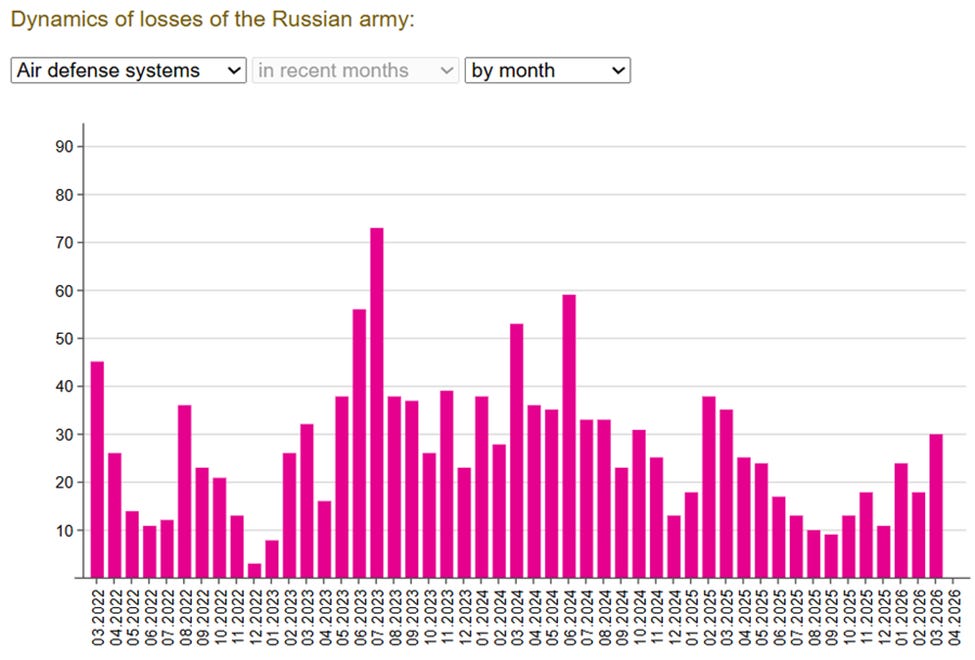
The front lines are nearly static… with a typical, slow Russian progress in some sectors. ‘Traditionally’ for this war: March-April are the months with the least of major changes in the flow of the ‘front lines’. The Ukrainian drone attacks on Russian air defenses continue. Ukraine’s long-ranged drones continue their attacks in Russia and an oil terminal that was untouched in the recent Baltic Sea attacks was set on fire.
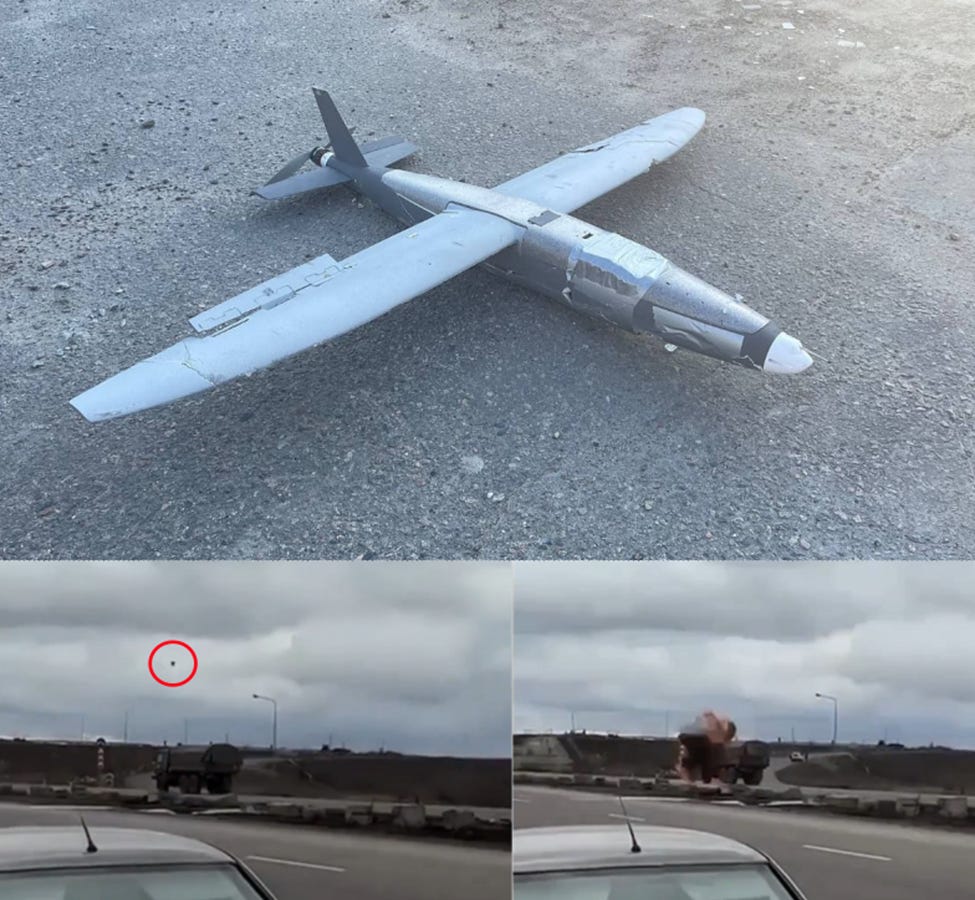
And there’s a new Ukrainian drone that is attacking Russian logistics and does not seem to be affected by EW.
Sumy
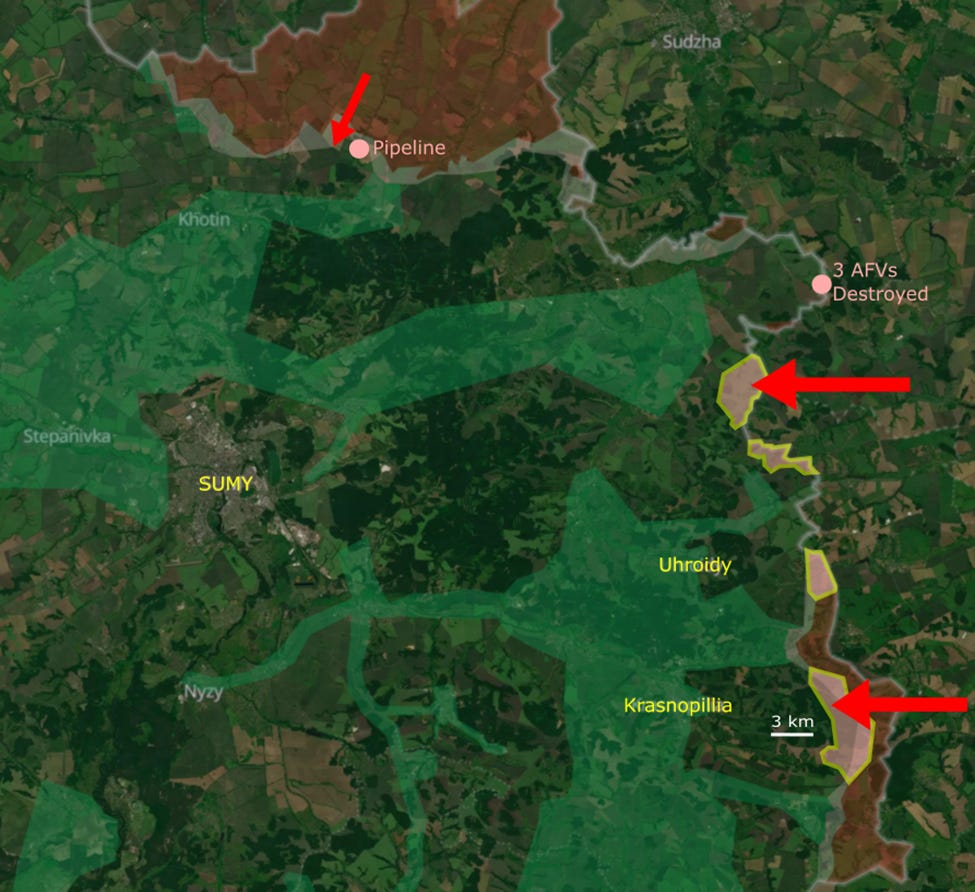
There was a moderate intensity effort along a 40 km wide sector that gained as much as 3 km of ground for Russia. Most of the operation was conducted by infantry but three Russian AFVs were destroyed trying to cross the border.
Russians emerge from a pipeline in large numbers but are eliminated by the 71st Airmobile brigade. They advertise their efforts when asking for water pumps.
35 km from the front, a civilian car was hit at a gas station by a drone in Sumy, killing one and injuring another.
Ukraine will suffer from unexploded munitions for the next two centuries. Sappers are constantly trying to reduce the threat. This week they found 87 munitions in Sumy Oblast, and 316 since January.
Vovchansk
The dam on the Pechinigsk reservoir was attacked 50 km from the front lines with a bomb. If it was breached, 45,000 people would have been flooded.
80 km from the front, a Kasta 2E radar is hit.
Kupiansk
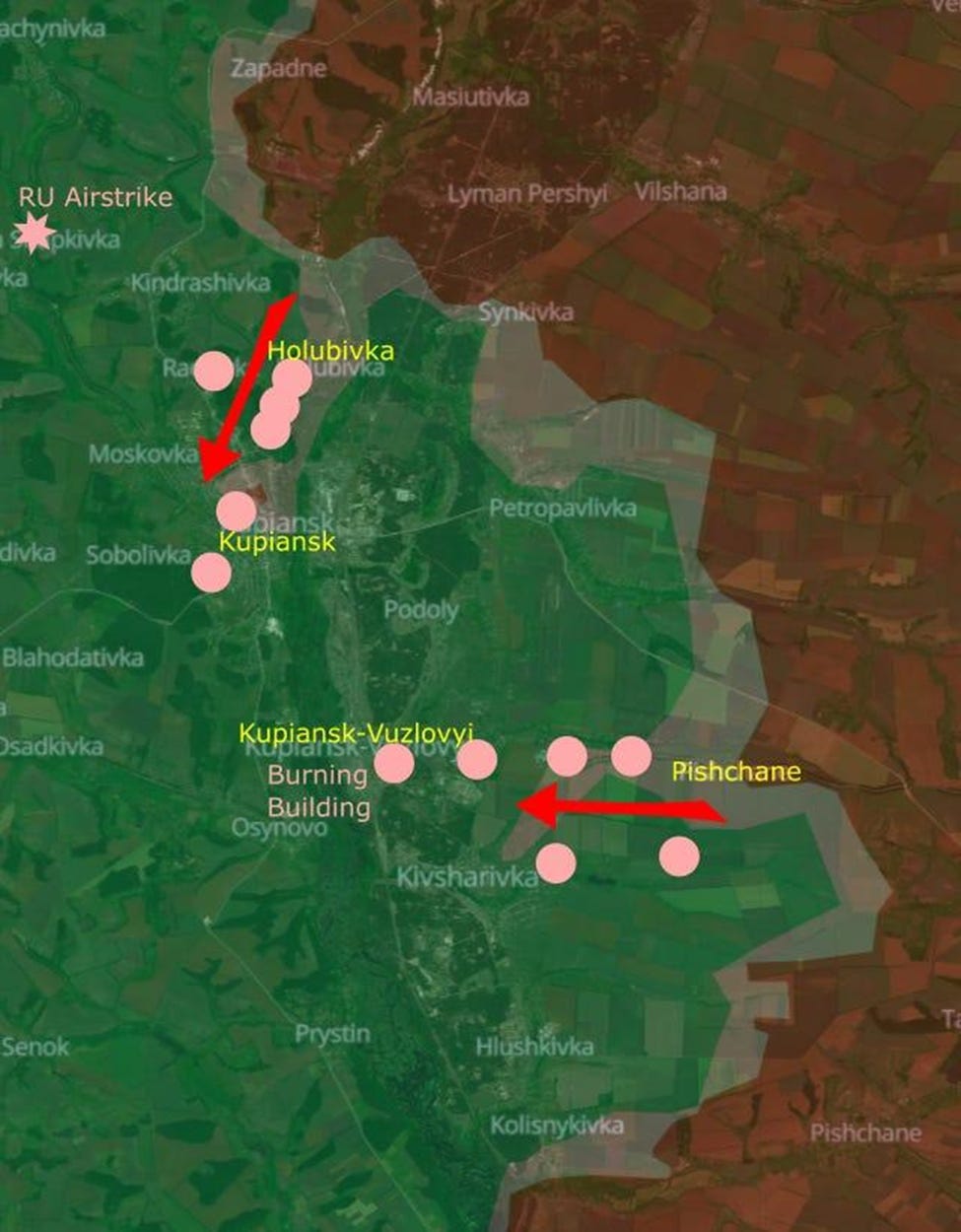
The Russians continued to push west from Pishchane, and many Russians made it into Kupiansk from the north. The lack of obstacles allow the Russians to make these 5-7 km penetrations. It’s very difficult to install simple wire obstacles when Russian drones are such a deadly threat.
In Kupiansk-Vuzlovyi, four Russians were killed. Two more ran into a building. They were offered surrender, which one accepted. The other met his fate in the second-story window of a burning building.
A Russian airstrike northwest of Kupiansk.
Sloviansk
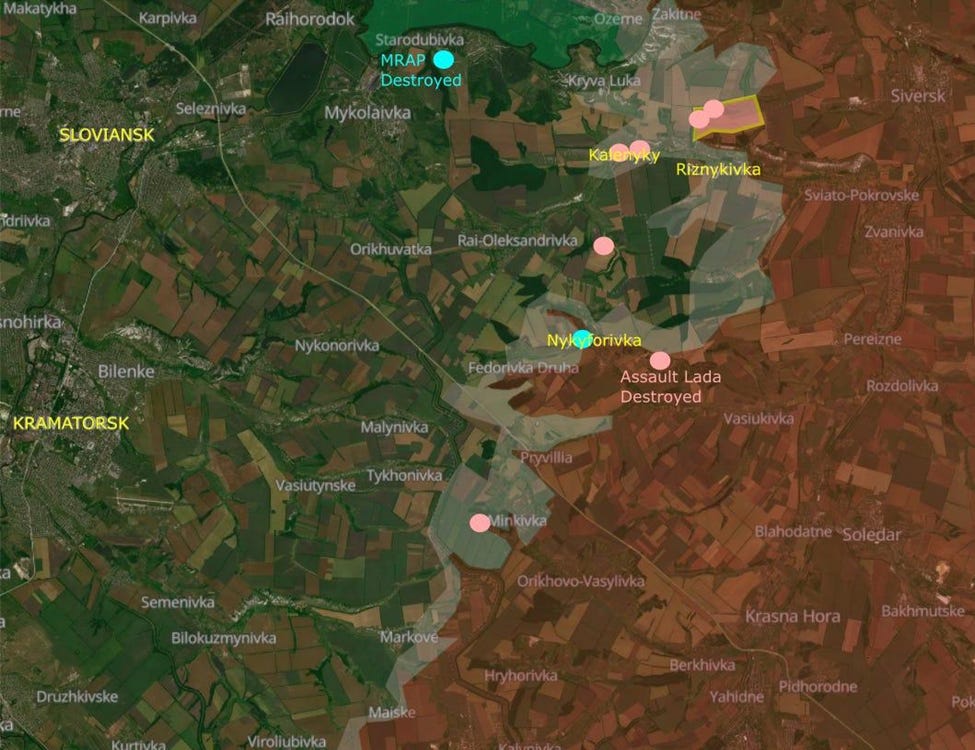
The Russians enter Kalenyky. Russia is still advancing but the pace slowed last week. Two Russian trucks are destroyed 17 and 35 km behind the front lines.
Kostiantynivka
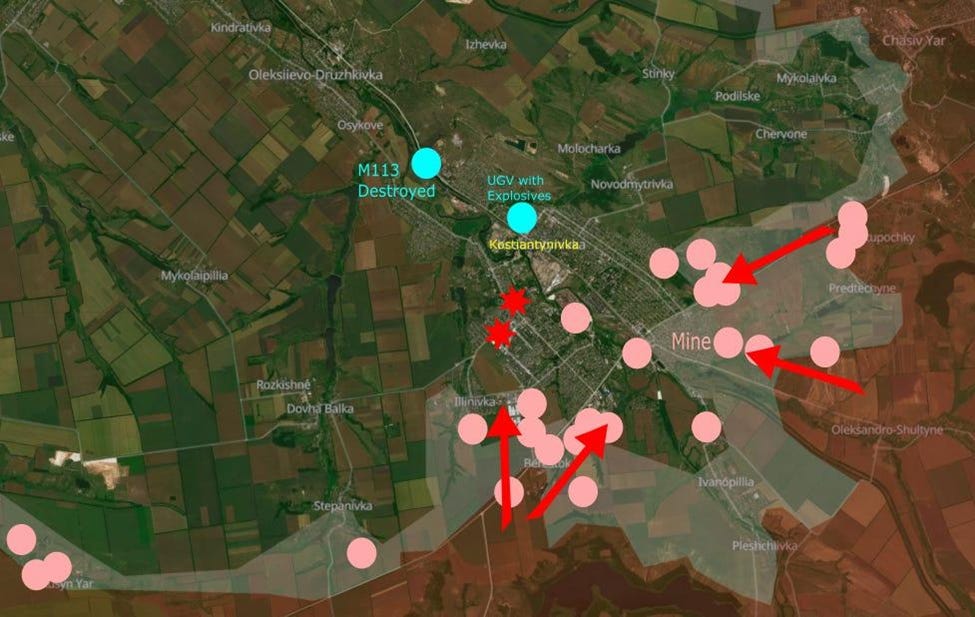
The Russian attacks are relentless because they sense they’ll get a foothold in the city soon. A Ukrainian drone dropes a mine that a Russian later found. A Ukrainian UGV carrying explosives is hit.
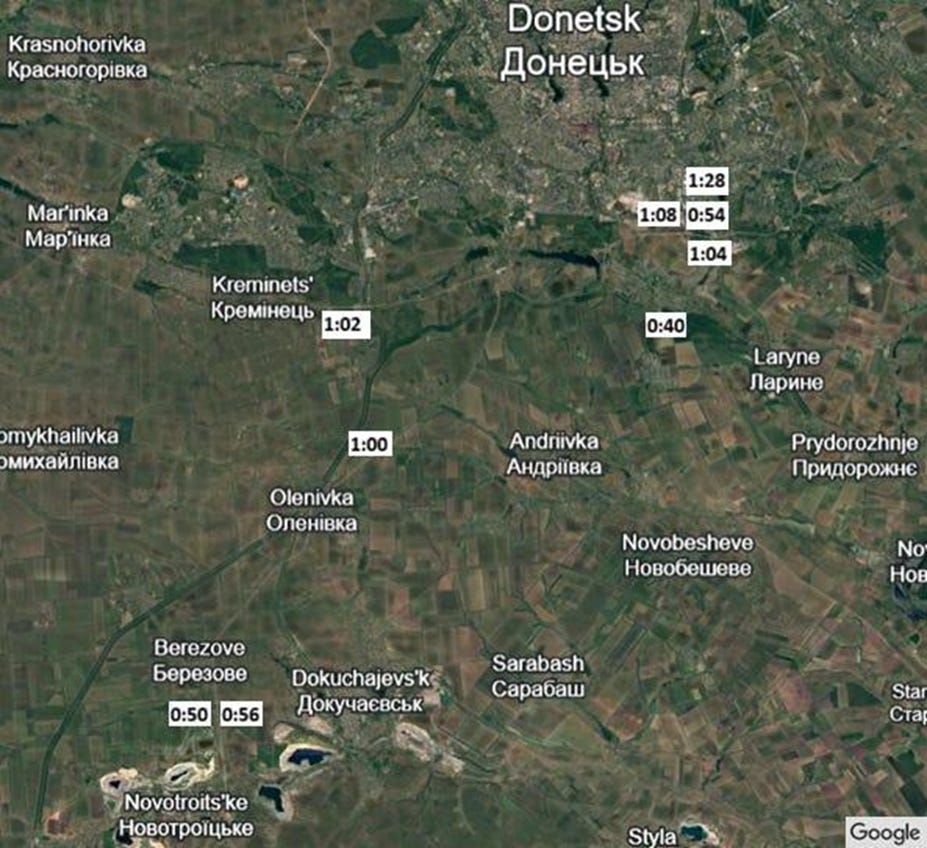
Just when one might think, the Russians have learned a few lessons from this war, after all: another UAV storage site at the Donetsk airport was attacked, this time with SCALP missiles. Drones attacked previous drone storage buildings at that location.
Pokrovsk
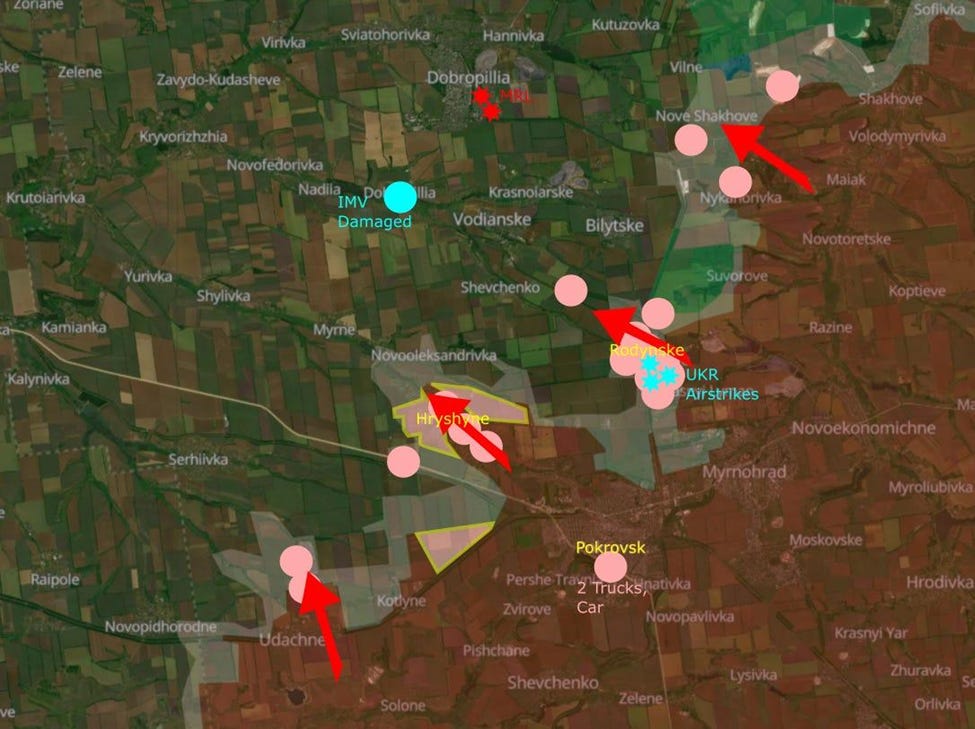
There are a lot of buildings in Rodynske that are wrecked, but are still standing. Because of that, Russian infantry and drone teams gather in them before infiltrating or conducting aerial operations. If there is a drone team or a large enough collection of people, Ukraine will hit them with airstrikes, which it did three times.
Russia also expanded their foothold in Hryshyne and now control most of it.
Novopavlivka
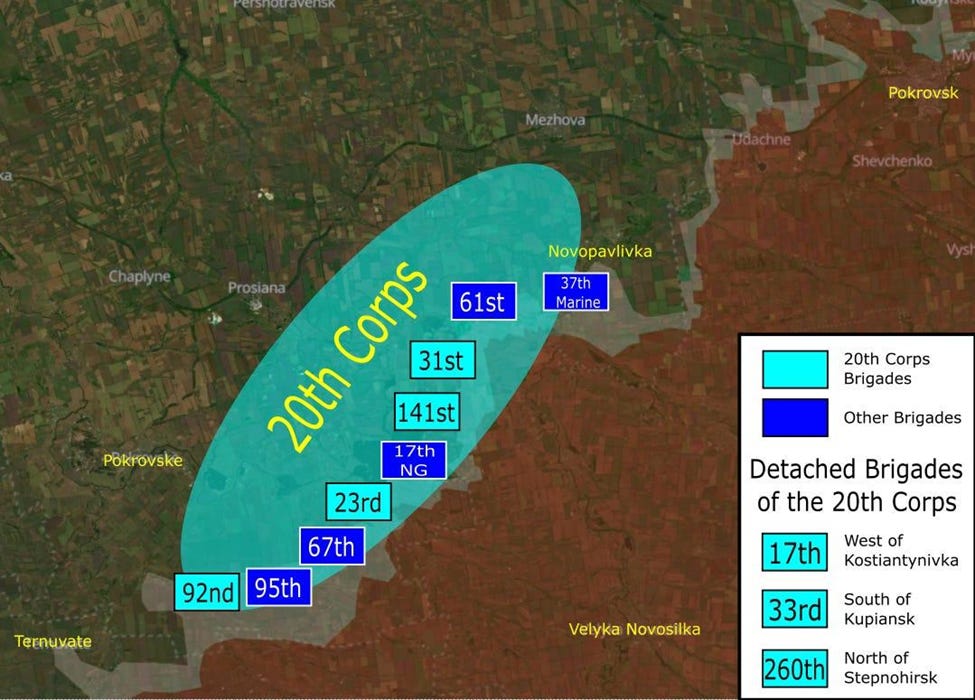
The 20th Corps faced many difficulties and had multiple commanders since it was formed in 2025 because they were unable to establish an effective defense. Major General Victor Nikoliuk provided stability and has since been promoted to an important command. He was replaced by Colonel Svyatoslav Zaits, who began his career in 2014 training as a company commander in Crimea. When Russian forces from local garrisons demanded their surrender, 80 of them refused, and he led them with their ammo, equipment and flag to friendly lines 120 km away. His latest assignment was Chief of Staff and Deputy commander of the 8th Airborne Assault Corps.
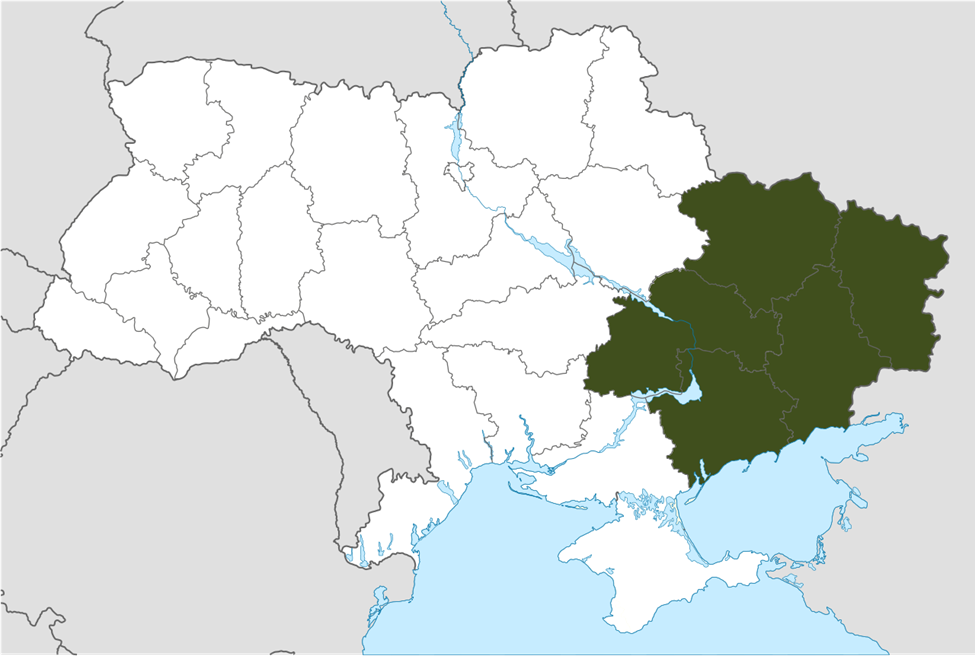
Huliaipole
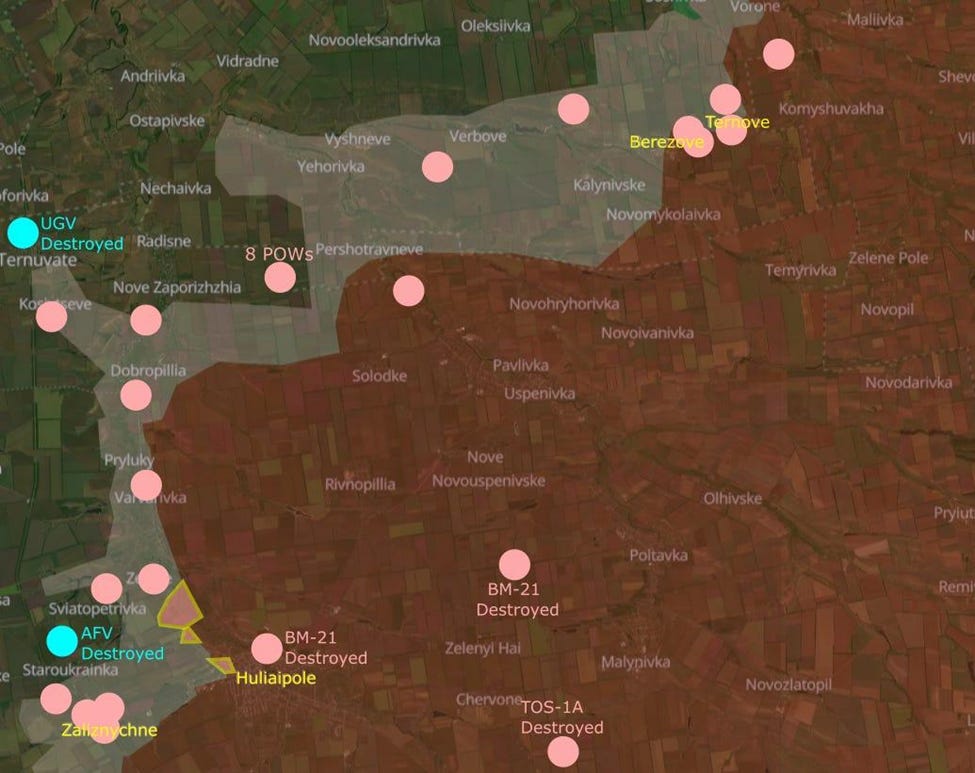
It’s clear that Ukraine isn’t pushing forward anymore. The Russians continue to infiltrate and have a lot of people passing through Zaliznychne and Berezove/Ternove. For the most part, Russians are detected and then eliminated by drones or infantry.
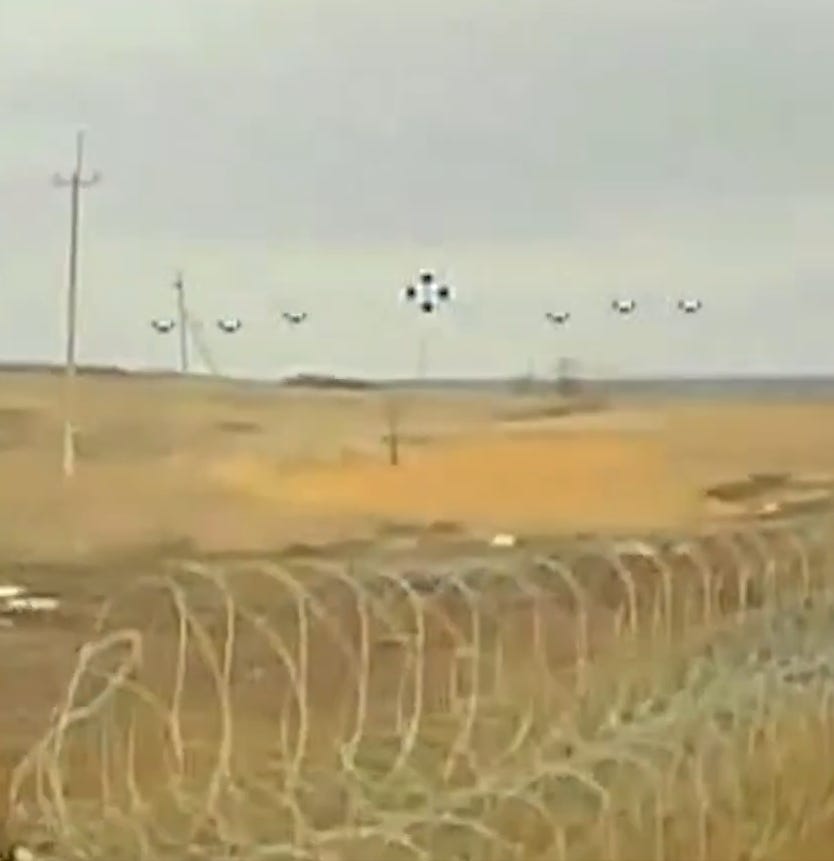
This is not an extensive obstacle. It is just three rolls of concertina wire with a small berm 20 meters away, but it slows Russian infantry down and leaves them exposed in the open. A Ukrainian drone patrols the wire, notices a previous success and then closes in on two Russians that haven’t breached the wire yet. The wire remained intact after the detonation.
Eight Russians trapped in a bunker eventually surrender to two Ukrainians from the 1st Assault Regiment. A ten minute compilation of drone attacks on Russians infiltrating in pairs or as individual soldiers. A Ukrainian UGV is hit by one drone while another waits on the road in ambush.
Zaporizhzhia
West of Huliaipole, this sector is static. There is a compilation video of Ukrainian forces clearing Stepnohirsk, but it’s unclear if any of the video is from last week. The fact that Ukraine is using vehicles to transport personnel indicates that Russia has a weak drone presence in this area.
Kherson
Taking control of the islands in the Dnieper river costs manpower without providing any operational advantage. This attempt cost Russia 15 personnel.
Occupied Territories
During one day, Pantsir (in Feodosia), Osa (Donetsk), Tunguska, and Buk (Zaporizhzhia) air defense systems were destroyed, as was oil tanks (2 in Crimea), an Iskander bases (2 in Crimea), and a Rubicon workshop/warehouse (Donetsk), and an ammo warehouse (Crimea) were destroyed. Another Rubicon logistics base was hit near Mariupol.
A fuel truck near Mariupol is attacked 90 km from the front line. A Nebo radar in Feodosia and a Tor near Lozove, Luhansk, were hit. Ammo depots in Azovske (Zaporizhzhia region), as well as Urzuf and Kulykivske (Donetsk region) were hit.
A radar for the S-400 system (Krasnohirske, Zaporizhzhia) and another Nebo radar was hit in Crimea, this time near Gvardiyske. A UAV depot was hit (Girne, Donetsk), a fuel/lubricants depot was hit near Mariupol, and warehouses were hit near Rybinsk and Topolyne. A fuel depot in Sevastopol was hit.
Russia
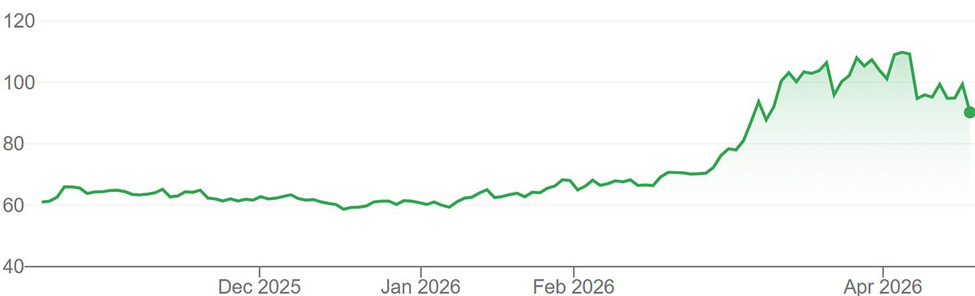
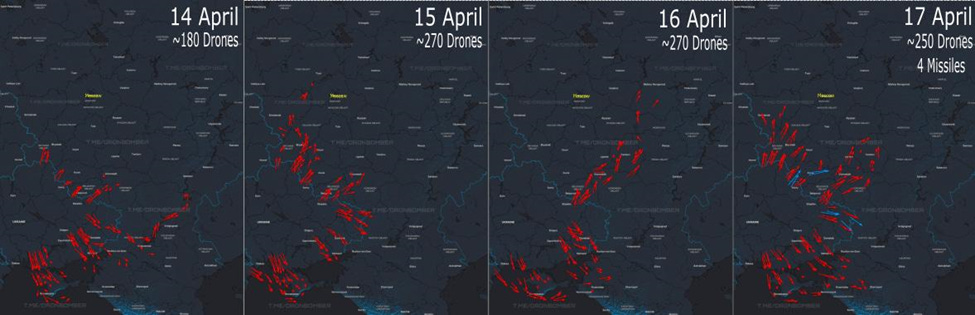
DroneBomber’s tracking of Ukrainian drone and missile attacks in Russian rely on Russian reports. Attacks on the occupied Crimean peninsula are constant because of the vulnerability of targets and additional support in identifying targets from partisans on the ground.

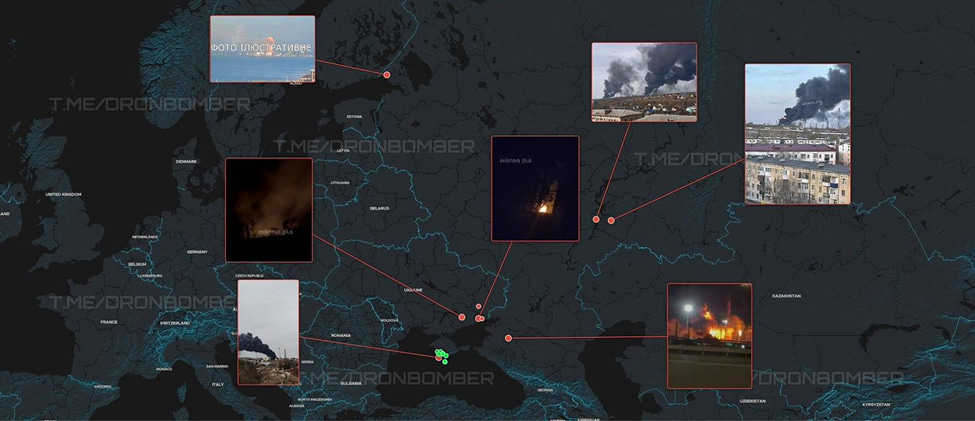
The Tuapse refinery was attacked once again and had a smoke plume 150 km long that increased to 250 km after burning for four days. Port infrastructure and tankers in the port were also damaged.
The Sterlitamak refinery produces jet fuel and is the only place that produces rubber for tire treads, so it was attacked. The Novokuibyshevsky and Syzransky refineries in Samara was hit, as was the Tikhoretsk pumping station in Krasnodar Krai.
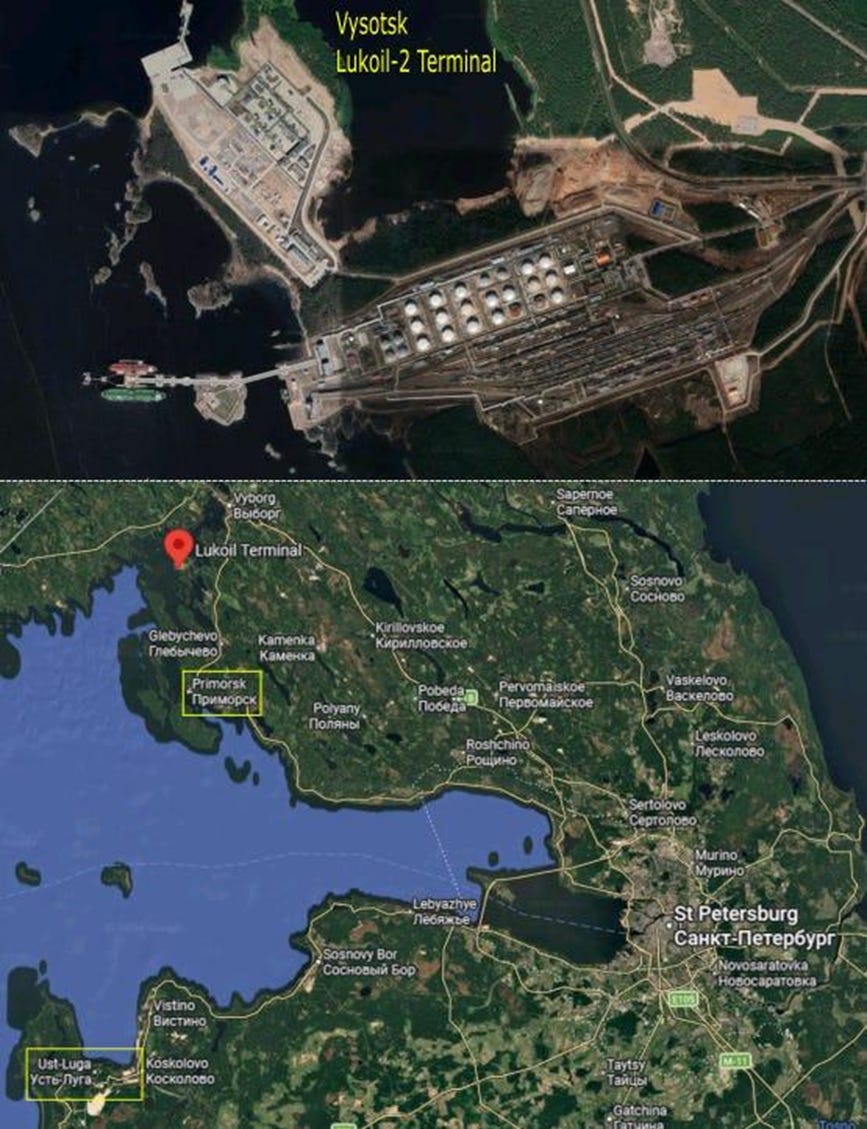
At Ust-Luga, Russia repaired two oil loading berths and is using them while one berth remains out of service. Read: Ukraine has to re-attack this facility. Indeed, it’s likely that precisely the question of Ukraine re-attacking this facility is going to show us whether the Ukrainian government and the armed forces have a system behind this campaign, or not…
Yet another train relay box was set on fire by local partisans.
Ukraine’s goal is to cost Russia $100 million a day. For the last three weeks, they’ve done so. Primorsk was attacked again.
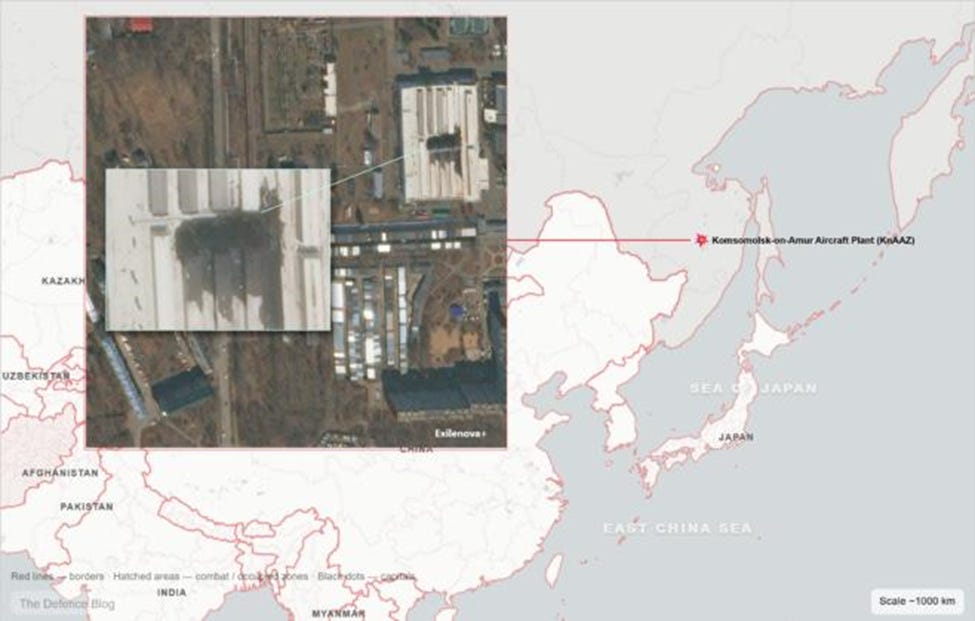
The Vector plant in Ekaterinburg has 3-400 employees that build missile-guidance systems, radars and other electronics. In 2025, 50% of the engineers were told to resign or the company would find a reason to fire them.
A woman was arrested because she was in a Telegram group that was going to protest the blocking of social media, VPNs and Telegram.
Russia has the resources, technology, equipment and expertise to maintain or increase oil production, but production will likely decrease in the coming years because of state policy, the investment climate and OPEC constraints.
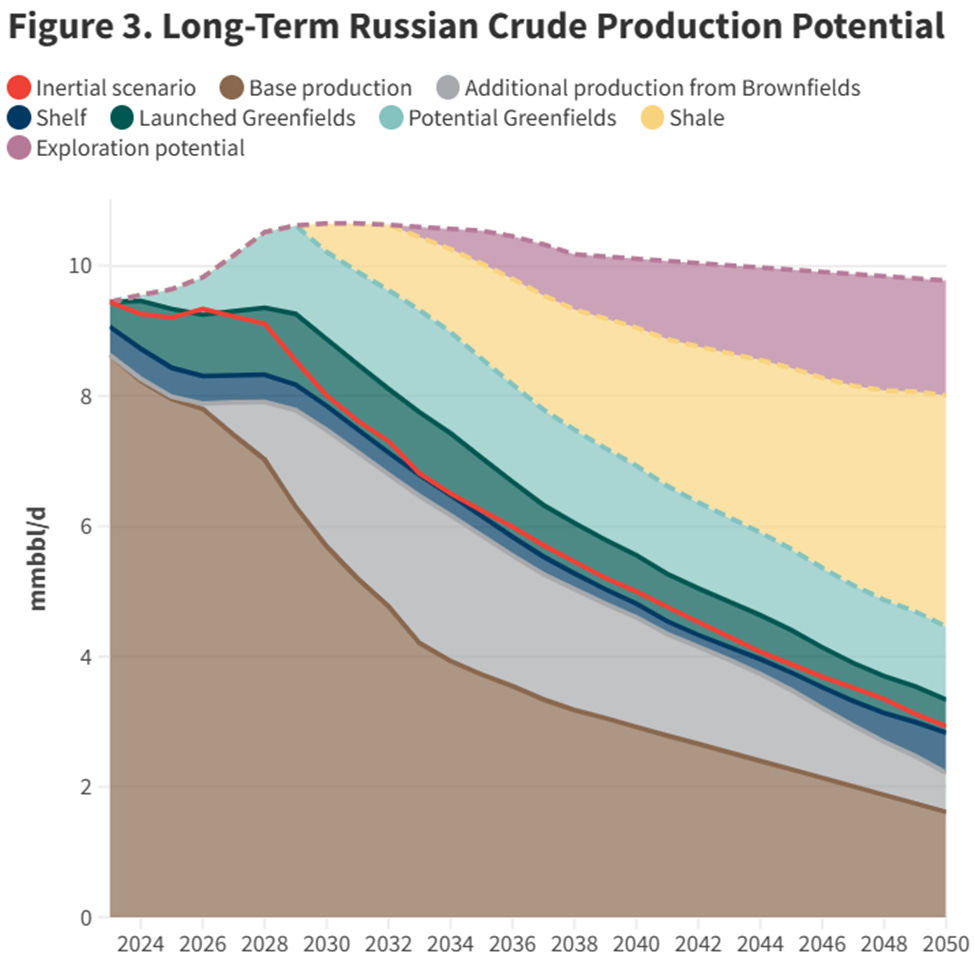
Russian oil fields cost about $20 per barrel to operate. With Russian taxes, the break even cost is $40/barrel. The exchange rate is also a factor, and the oil industry suffers when the ruble is strong and oil is cheap. As a member of OPEC+, quotas mean new fields are not developed until old fields run out. Development of new fields is expensive, particularly since most of them will be in remote areas that would require expensive infrastructure.
Perhaps because of his age, 86-year-old scientist Robert Nigmatulin had an open two-minute discussion. His says that with the Russian political system restructuring only begins after a collapse and that economic collapse is beginning. He goes on to explain that a country should have an opposition party with debates to find alternatives solutions when the current policies are failing and there is no political opposition in Russia. This means that the responsibility of change falls upon the leader, and Putin surrounds himself with people that only agree with him, and any disagreement is viewed as a threat.
In an economic forum, Nigmatulin says that Russia has the lowest incomes in Europe and that the poorest regions in China had higher incomes than the poorest regions in Russia. He said that in the Soviet Union, they were poor but were still able to make leading advances in space and nuclear technology. Russia’s GDP growth averaged 1.5% per year since 2015 while consumer prices increased by 77%. Population is an important economic factor and Russia’s population will decline by 600,000 people per year. The decline is based on demographics. The losses in Ukraine will only increase the rate of population decline.
Ukraine
A man born in Moscow, but living in Kyiv and possessing Ukrainian citizenship, has set his apartment on fire before leaving. Then he shot and killed five people and injured 14 others. He barricaded himself with several hostages in a supermarket and killed one of the hostages. When negotiations failed, special forces killed him.

There are limits to the grass roots contributions of civilians to Ukraine’s defense, but they should not be underestimated. Volunteers across Europe are using 3-D printers to create components for the Ukrainian army. A unit places an order, it’s sent to the volunteers and they make everything from bomb casings to LED flashlights and send it directly to the unit. One group printed over 100 tons of plastic in 2025, and there are multiple groups.
Zelensky said that the 228 members of the drone team deployed in several Gulf countries shot down Iranian drones, including some with jet engines. Mass production of drones capable of intercepting jet engines will begin soon. A month ago, Zelensky visited Qatar, Saudi Arabia, Jordan and the United Arab Emirates. He also signed defense agreements with the UAE, Qatar and Saudi Arabia.
Diplomacy
A pro-Russian party is leading in the Bulgarian elections. While he opposes sending supplies to Ukraine, he took credit for bringing a Rheinmetall factory into the country.
Orban was closely allied with Russia. According to Magyar, Orban’s government provided money to the Conservative Political Action Conference (CPAC), an annual political conference where Republicans network and launch presidential campaigns. CPAC denied it ever received funding from the Hungarian government.
Months after being shut down, the Druzhba pipeline might resume delivery to Hungary next week, just two weeks after Orban lost the election. Orban might lift his veto on the €90 billion EU loan once the pipeline exports resume.
Like other Gulf nations, Qatar had strong military and economic relations with the US and had been working on warmer relations with Iran. They were still attacked by more than 700 drones and missiles that shut down its natural gas production and disrupted its reputation as a haven for business. With trillions of dollars in economic exchange, they expected to be consulted and have more influence over major decisions in the region and found out that Israel had more sway with Trump than all the Gulf nations combined. There are few alternatives to the US at the moment, but they are reconsidering their security status and relationship with the US, much like Europe and Canada have been doing. Any solution that will reduce reliance on the US is being considered. The impact of Trump will last long after he departs.
After storming the US embassy in 1979, Iran spent years reassembling shredded US documents. In 2011, the US Defense Advanced Research Projects Agency (DARPA) offered $50,000 to the first team that could reassemble five shredded documents. The winning team took a month to finish with the aid of a computer. The Hungarian army seized bags of shredded government documents and will reassemble them with AI.
Twenty minutes before Iran’s foreign minister announced the Strait of Hormuz was open investors placed a bet worth $760 million that oil prices would fall. Sixteen bets of $100k were made predicting the timing of US airstrikes on Iran on 27 February. A single user “Magamyman” made $550,000 after betting Khamenei would topple moments before he was assassinated. Right before Trump announced a temporary ceasefire on 7 April, traders bet $950 million that oil prices would come down. There is suspicion that the administration will not investigate the possible cases of insider trading.
Equipment
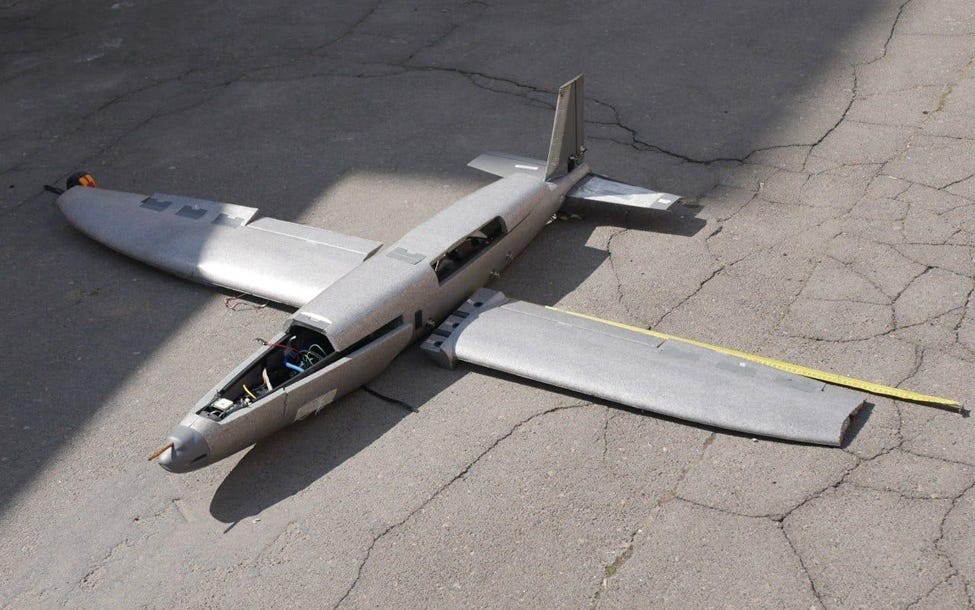
The White Stork company, led by former Google head Eric Smidt, developed the Hornet drone, which the Russians call Martian-2. It was first used last September in small numbers, then disappeared until March. It started attacking logistics in areas that had been protected by electronic warfare. Russia says it has been used up to 145 km from the front lines. Depending on the range, it has a 1.5-4 kg warhead. It has a speed of 100-120 kph and can reach 200 kph in a dive. The price is unknown.
Hornet/Martian-2 drones in action.
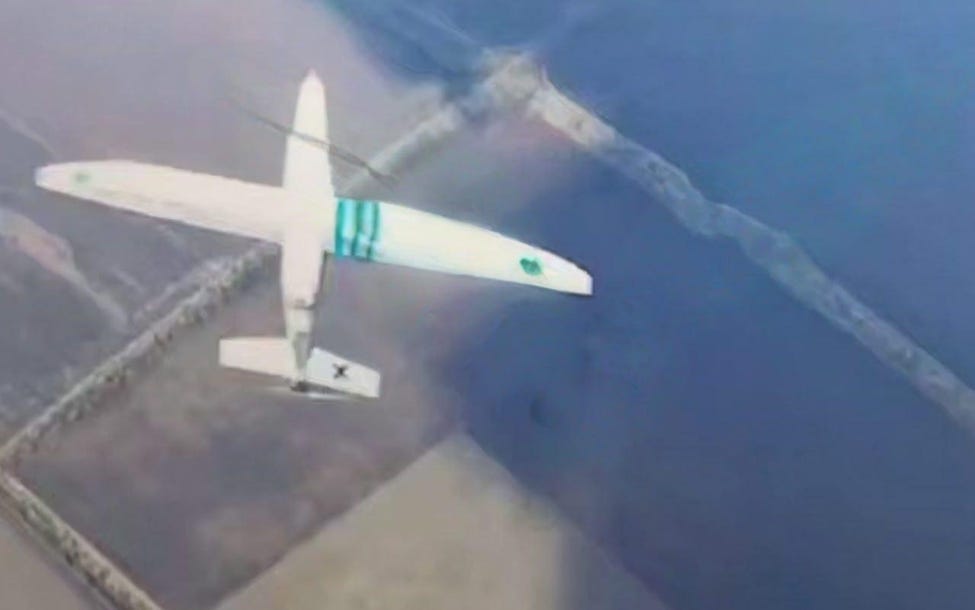
It doesn’t use GPS to navigate but orientates on terrain features. It sends and receives data using non-standard, encrypted signals while hopping frequencies to avoid jamming. The Russians assume the signals hide in the civilian bands of Wi-Fi frequencies of 2.4-5.8 GHz and standard scanners filter out civilian signals. It has an AI target detection/recognition system and cannot be jammed in its terminal dive.
Ukrainians are now developing their own SAM, called the Koral. They’ve been working on it since 2021 and few details are known, but there is speculation that it may have moved beyond the prototype phase.
Ukrspecsystems started producing 200 drones a month in the UK back in February. This includes the PD-2 and Shark intelligence drones with 3.5-5 meter wingspans.
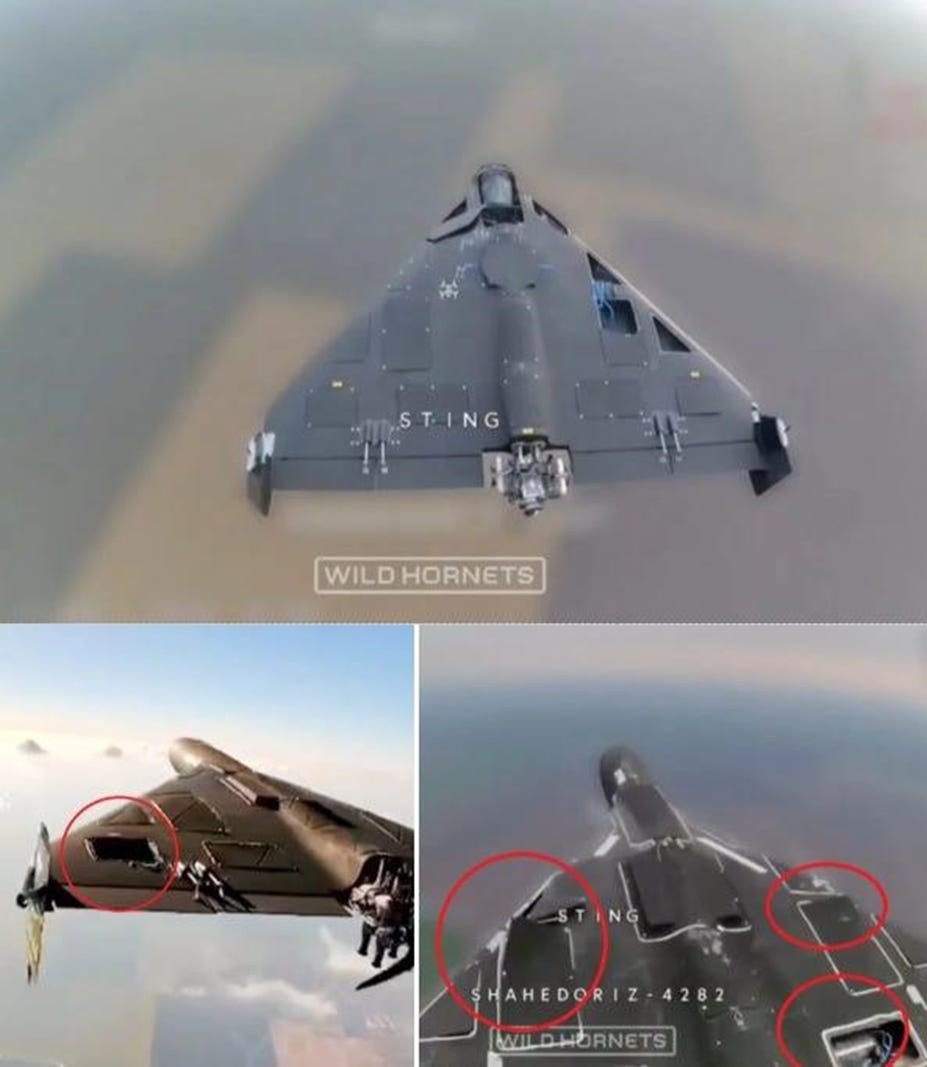
In response to the faster Shahed drones, Ukraine is field testing the Bagnet drone with a 250 kph speed, a range of 15 km, and automated targeting. The Sting-2 drone from the Wild Hornets has a speed of 315 kph.
Russia has a ground drone with six directional mines that would be used to clear a path in a minefield.
Excellent detail as always, thank you 👍
Great work as always, thanks!