Ukraine Update

Overview
Russia is still advancing slowly at Kupiansk and Kostiantynivka is following the pattern of other cities that eventually fell, but the front lines are actually in good shape.
The attrition of Russia air defenses continues to make it easier to fly over the occupied territories and in Russia itself. The attacks on Russian logistics at the 60-200 km range are going to grind down Russian capabilities over time and isolate the battlefield. The first priority should be to gain air superiority in every sector. The limiting factor is not equipment, but manpower.
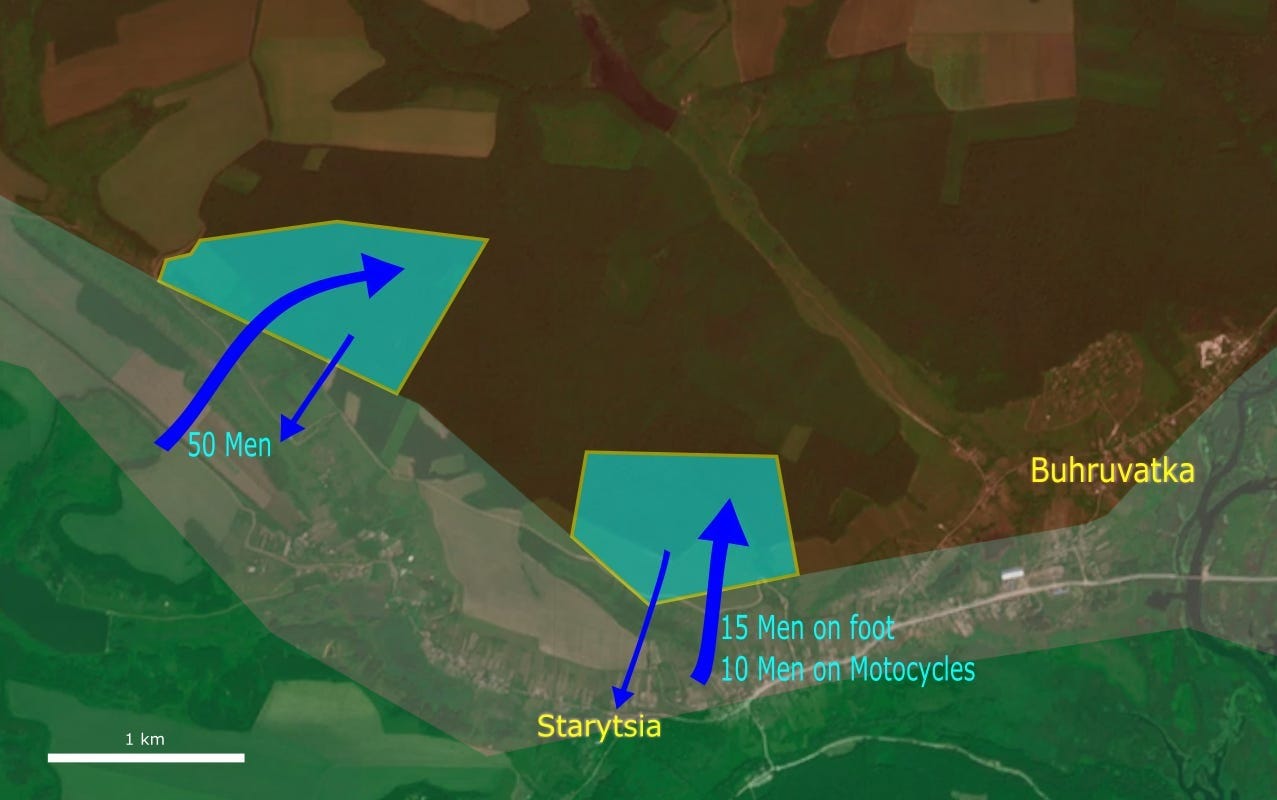
It is possible that attacks on a sector could hollow out the Russian forces and a limited, small-scale advance would be possible, but the priority should be winning the war of attrition, not territorial gain. To that end, Ukrainian forces at Starytsia conducted an operation to destroy Russians, not gain territory.
The long-ranged attacks over the coming months will put increasing pressure on the Russian war machine. If Russian cannot find a way to limit them, the machine will eventually crack. Currently, Ukraine is increasing the number of long-ranged attacks.
Vovchansk
The 72nd Brigade observed Russian behaviors at Starytsia, eight kilometers west of Vovchansk. They noticed how the Russians moved to the front lines to launch assaults and how they were supported. Normally, there were 200 Russians in that sector but there were only 150 men at the moment. They sensed an opportunity and planned a spoiling attack to disrupt Russian operations and then return to their defenses.
Drones and tanks provided supporting fires. The infantry cleared mines and then moved quickly to engage Russian positions. Latin America volunteers from Brazil and Columbia moved on motorcycles and foot. They cleared enemy positions and then held them against Russian counterattacks before pulling back to their own positions.
Kupiansk
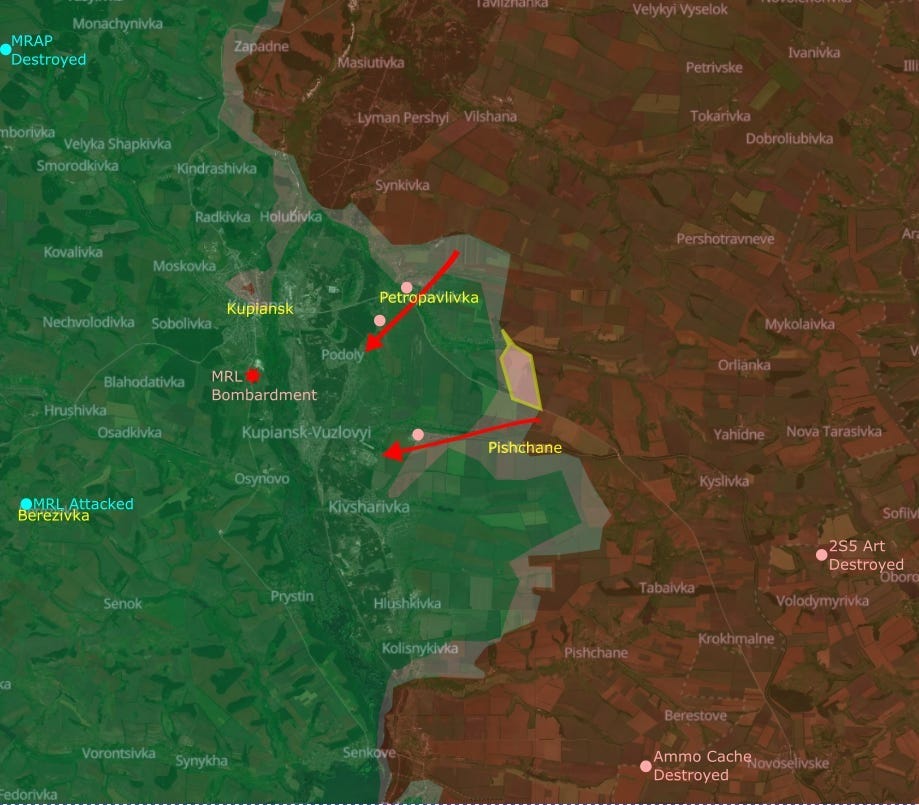
Russia keeps crawling forward, even as infiltration groups are destroyed. The front lines from Pishchane to the Oskil river is ten kilometers.
Russian rockets attack Ukrainian logistic routes.
A Russian ammo cache is destroyed. A Russian 152 mm artillery piece is observed while firing and then attacked. Russians are attacked near Petropavlivka.
Lyman
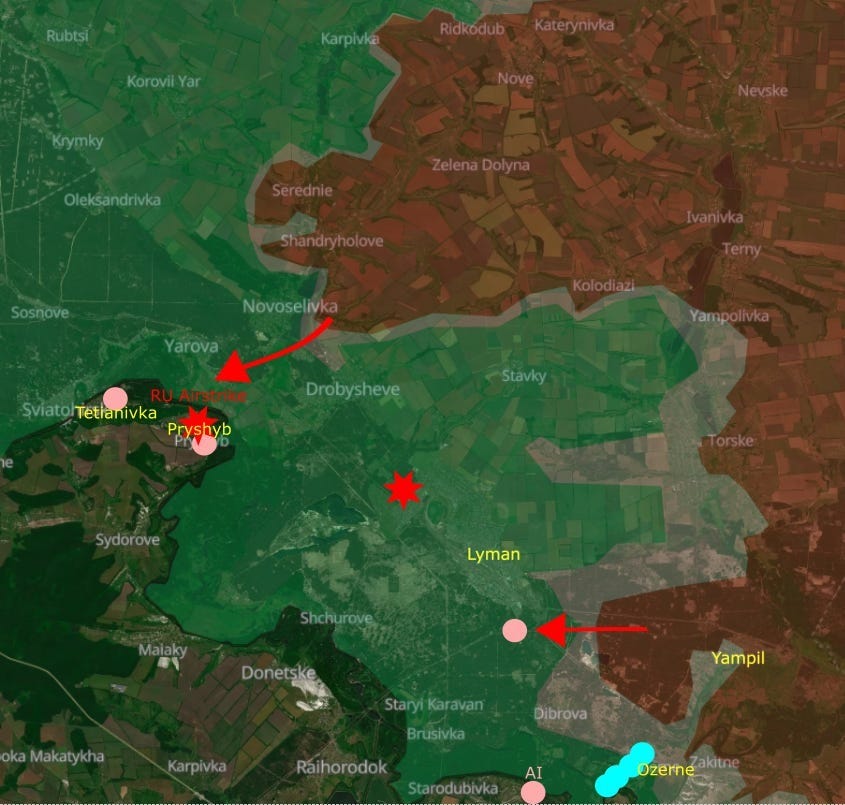
Russians crossed the Siverskyi Donets river at Pryshyb. Ukraine attacked them with drones. Russia attacked Ukrainian positions with airstrikes. The Russians also crossed at Tetianivka, across from Sviatohirsk. Their intent was to disrupt Ukrainian logistics and be supplied by drones.
Russia generated an AI video for another fake crossing west of Ozerne.
Sloviansk
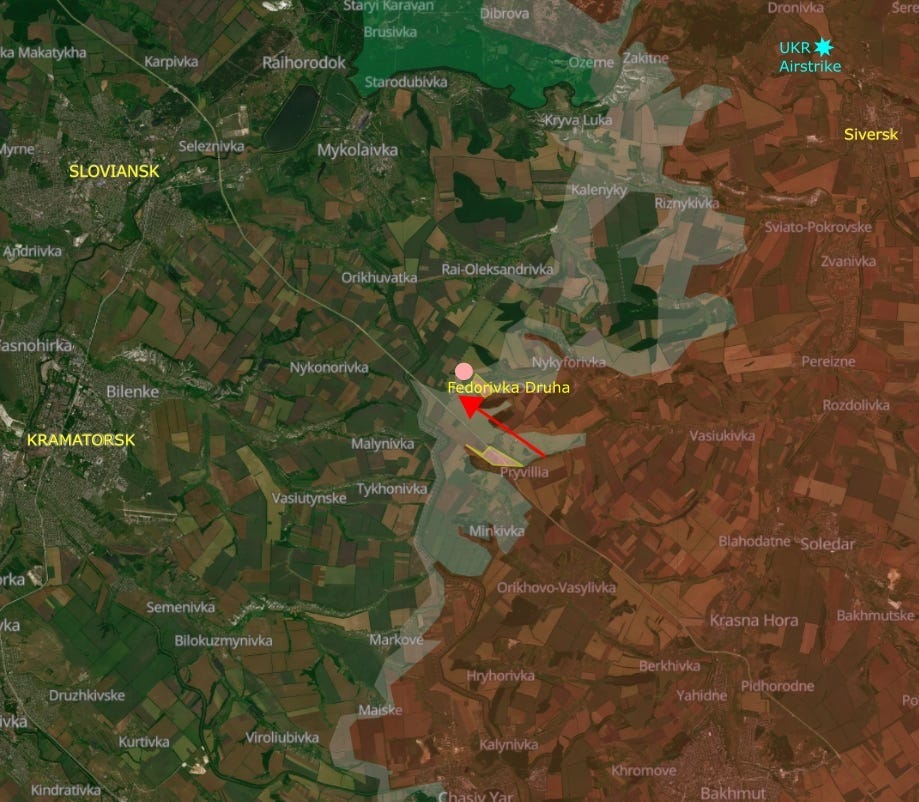
Russia inched forward at Fedorivka Druha but there was little video evidence of activity last week.
Ukraine bombs one of two railroad bridges northwest of Siversk.
Kostiantynivka
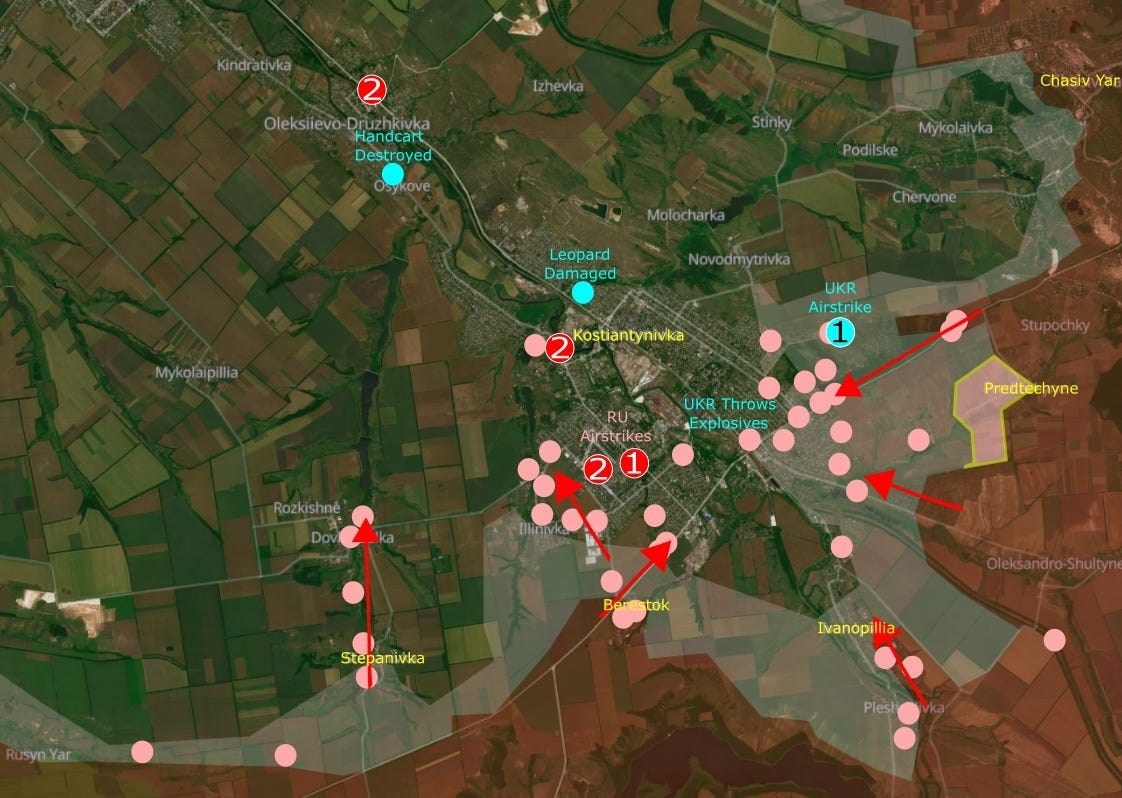
The intensity in this sector is high as Russia feels that success is near. More Russians are reaching the city. Once their infantry reaches the buildings in the city it becomes more difficult to eliminate them. Russia is also trying to advance Stepanivka and is penetrating further.
Ukraine attacks Russian infantry moving through Stepanivka. Ukraine throws explosives into a building in the city. A Ukrainian airstrike east of the city.
A Ukrainian Leopard 1A5 is damaged. A Ukrainian ammo dump is destroyed. A Ukrainian soldier abandons his handcart as a Russian drone attacks.
Pokrovsk
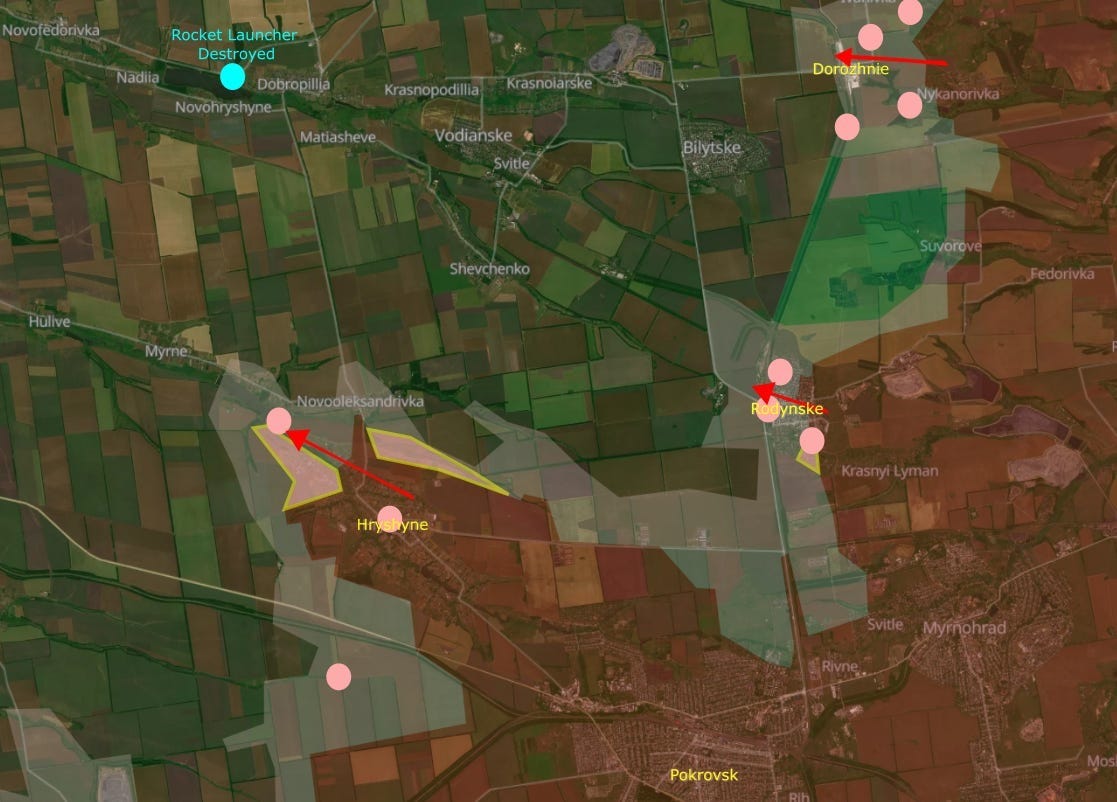
There are houses and woods that provide cover for the Russian advance at Hryshyne. There is less cover at other locations so it is harder for Russia to advance out of Dorozhnie and Rodynske.
A Ukrainian rocket launcher is destroyed.
Huliaipole
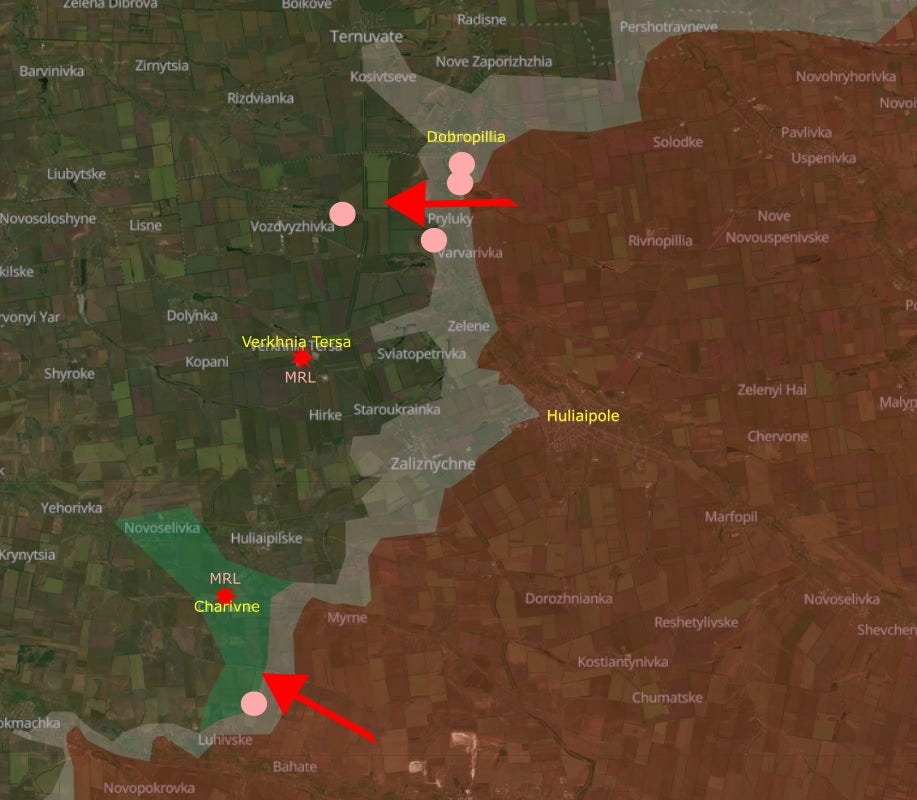
There are still attacks south of Dobropillia and towards Charivne but this sector is so much more stable than it was just a couple months ago. Charivne is bombarded by rockets.
Kherson
Ukraine’s 34th Marine Brigade used a drone with a speaker and suggested that the Russians should surrender. They moved to a Ukrainian-controlled position on the left back and were evacuated by boat weeks later. They received McDonald’s food, and one said that when his boat sank in an attack he lost his weapon. His commander told him to keep attacking with a shovel.
A drone control point in Hola Prystan was bombed.
Russia dropped a flag from a drone on the right side of the Dnieper so the village must be theirs.
Occupied Territories
Drones of the 1st Azov Corps regularly patrol the skies of Mariupol, the home of Azov, and the roads around it and destroy Russian military vehicles. Two trucks are destroyed by one drone 40 km behind Russia’s front line. Another truck hit 50 km from the front line.
A Tunguska and two Tor air defense systems, an oil storage tank, train fuel cars, gas infrastructure, and communication towers were destroyed. A Pantsir, Tor, 2 P-18 radars, six airspace control complexes, three troop deployment sites and a telecom center were hit.
Ukrainian mid-strike drones have been hitting targets up to 200 km away. The Sea of Azov is around a hundred kilometers away. Russian bloggers are calling out the danger of their logistics being hit hard enough that the land bridge to Crimea might be too dangerous to travel.
Russia
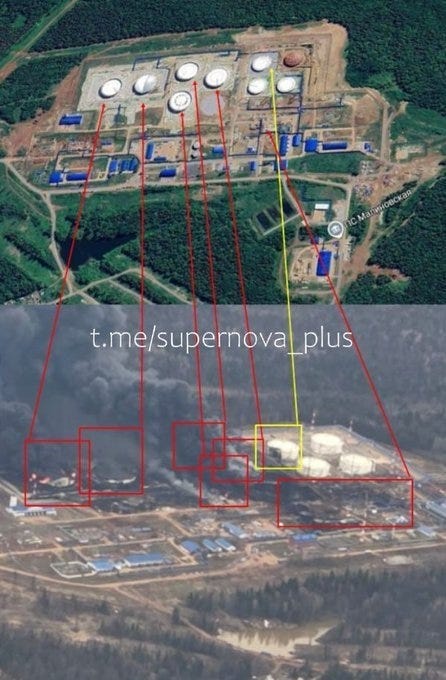
The refinery at Perm was attacked again, as was the pumping station (above), in which a storage tank was damaged. Russia lost $7 billion in oil revenue so far in 2026.
Fires were started at two locations in the Kirishi refinery in the Leningrad oblast. The AVT-3 unit in the Yaroslavl refinery was hit.
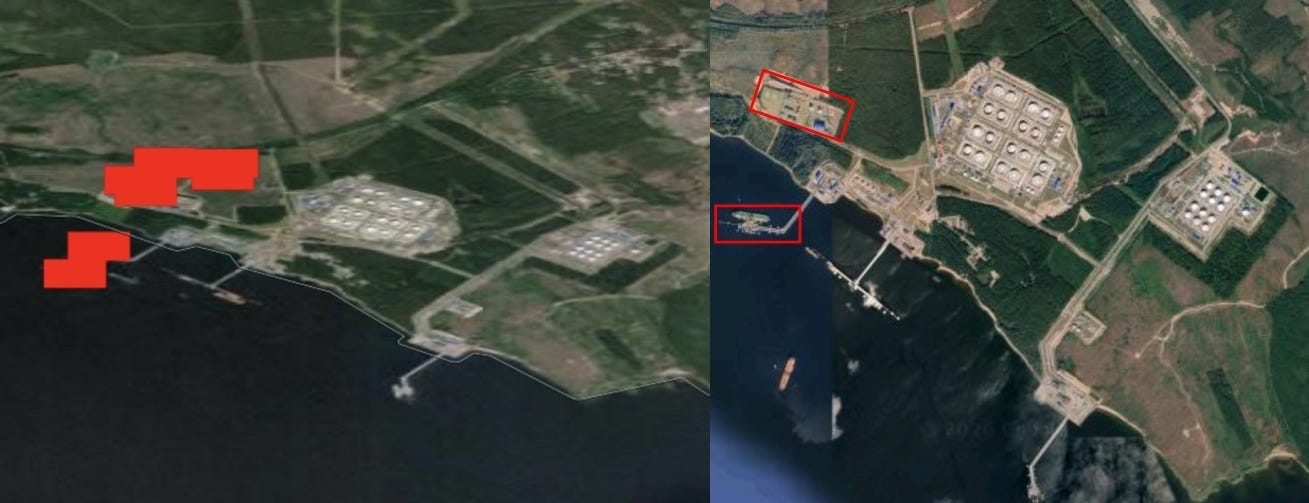
An export terminal and ground facilities were damaged at Primorsk. An oil tanker and Karakurt-class ship that launches Kalibr missiles were also struck.
When Ukraine was attacking Chelyabinsk airfield a couple weeks ago they also hit an ammo depot in Kedrovka near Yekaterinburg. The Sverdlov explosive plant in Dzerzhinsk and a chemical plant in Bryansk were hit. An FSB building near the Georgian border was attacked. An FSB building in Grozny was attacked.
A helicopter was lost somewhere, without details being posted.
VNIIR-Progress is about 1,200 km from Ukraine and produces antennas and receivers for satellite navigation systems, such as GLONASS, GPS and Galileo. This equipment is used in missiles and Shahed-type drones and they are resistant to EW jamming. The factory also produces other electronic gear for the navy. It has been repeatedly attacked by drones, but the smaller warheads on drones cause a limited amount of damage to buildings and facilities that do not produce anything that is explosive or flammable.
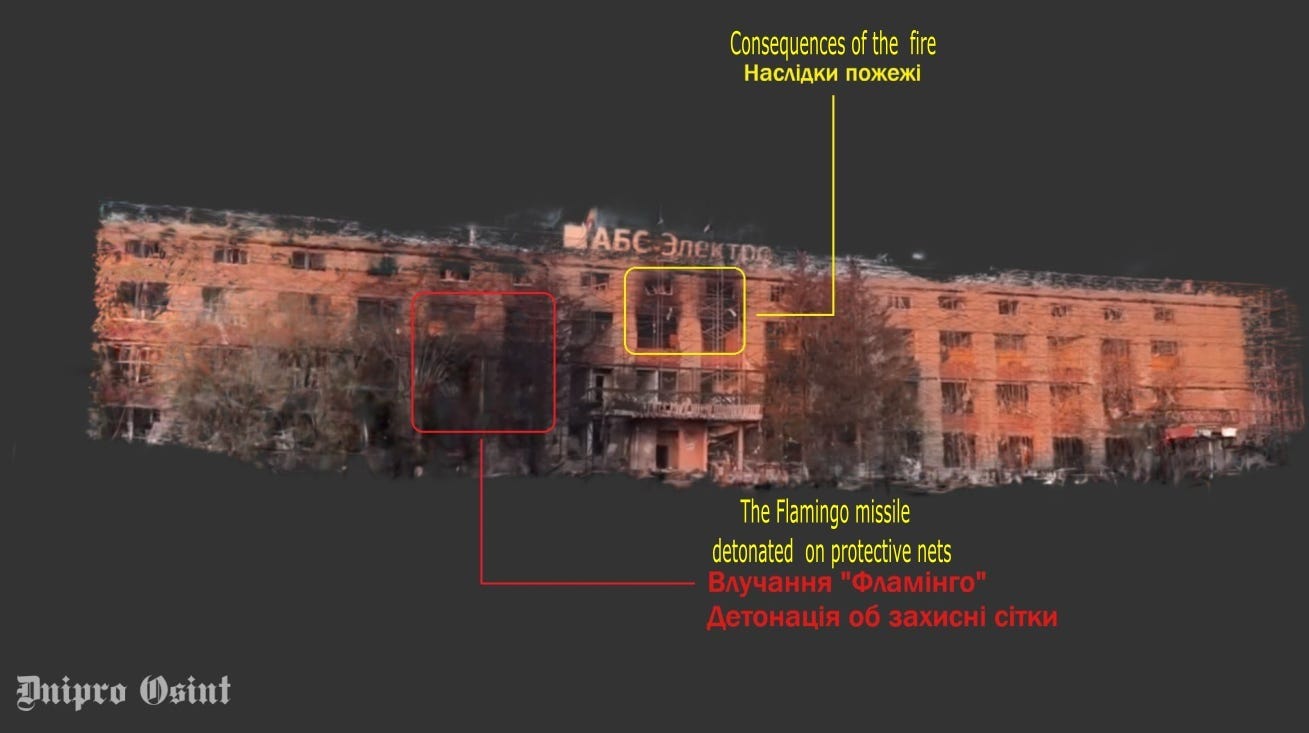
The anti-drone netting caused an explosion on the exterior of the building but could not prevent a large fire that destroyed much of the interior.
Flamingo missiles were sent because their large warhead would do a lot of damage if it hit. Accuracy has been a big problem, though. Flamingos have a high interception rate if a Russian air defense system is able to engage them. Avoiding air defense systems complicates navigation and decreases accuracy. An additional factor is that this factory is in the middle of the city of Cheboksary, and if the missile misses the aiming point by a large distance it would impact civilian buildings, which has never been part of Ukraine’s objectives.
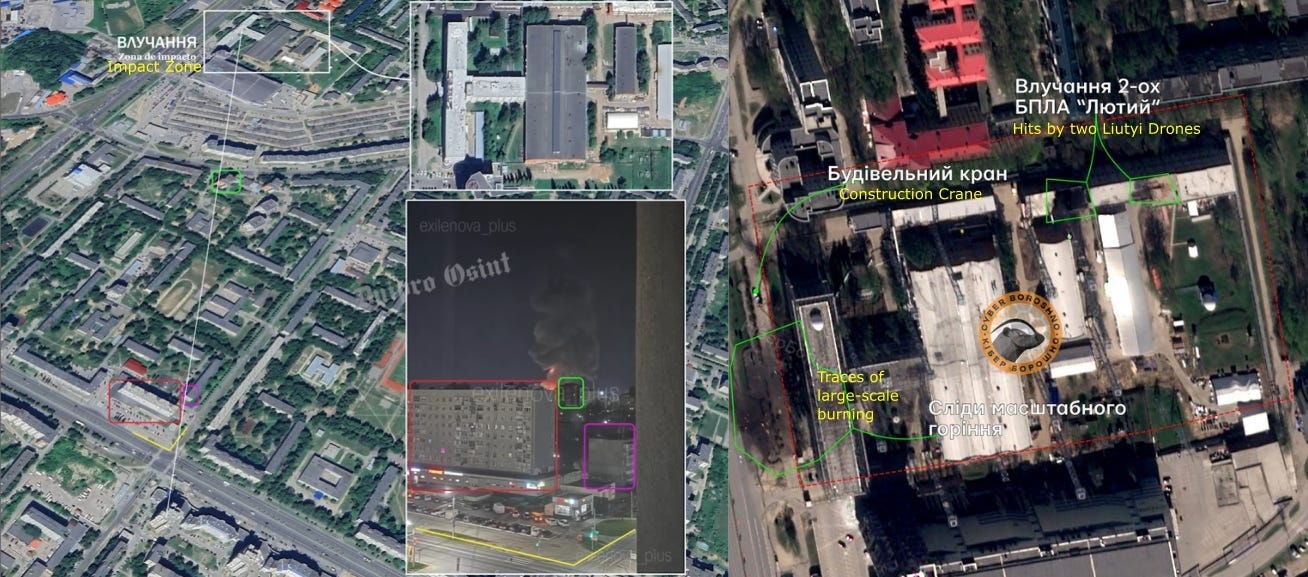
The Flamingo hit the front of the main building at an angle. A crane was erected to clear debris. Two Liutyi drones hit a different building, causing smaller but significant damage.
One Flamingo hit the front of the main building and two drones hit another building. This video shows the size of the flames on the main building, and a car drives by after the flames died down. This video shows some of the damage in daylight and the anti-drone netting can be seen. This video shows the Flamingo missile flying by and impacting the facility, and shows the daytime attack of drones, some of which hit residential buildings. This video shows the damage from the Flamingo warhead at an electromechanical college across the street about 130 meters away.
A Russian missile ship on the Caspian Sea was damaged while it was moving.
Russia is using anti-drone netting at a submarine base on the Pacific.
With his war not making progress in Ukraine, and more things in Russia exploding, and the Russian economy becoming increasingly difficult for the average citizen and the oligarchs, Putin’s approval rating is declining, especially with the unpopular internet restrictions. He’s now reached the paranoid phase of the dictator and there are reports that he is spending a lot of time in bunkers to avoid assassination. He no longer visits his residences in Moscow and Valdai.
Multiple Victory Day parades were canceled in cities but St. Petersburg and Moscow still held a parade without equipment. Putin asked for a May 8-9 ceasefire and Zelensky said they’d honor it if it started on May 6th, but we already know how Putin honors ceasefires. A Russian helicopter was chasing a Ukrainian drone over Moscow five days before the parade. Zelensky allowed Russia to hold the parade by promising Ukraine wouldn’t bomb Red Square. North Korean troops participated. Foreign journalists were excluded, live feed was delayed and archive videos were on standby in case the parade was attacked. After 45 minutes, the parade ended with a flyover of the aerobatic team in level flight.
Russia reinforced Moscow with additional air defense systems, which means they had to be removed from other sectors. More than 50 new air defense positions were built around Moscow since the first Ukrainian drone reached the city in May 2023, and the air defenses have been rapidly reinforced since August 2025.
Russia plans to recruit at least 18,500 foreigners this year. Each region in Russia is supposed to provide 0.5% and 3.5% of all foreigners within their borders, which means immigrant workers from central Asia will be targeted. People in Africa and Asia will also be lured with the prospects of jobs and then forced into the army as assault troops with little training. 1,000 Kenyans have traveled to Russia and only 30 returned. Some are given a free flight to Russia and if they refuse to join the army, they are told they cannot leave unless they repay what was spent to get them there. One recruit from Botswana refused to sign several contracts written in Russian even when beaten. Ironically, when the Russians gave him a physical they detected a heart condition and never sent him to Ukraine. He escaped from the camp in Russia and a diplomat from his country helped him return home.
As early as September 2022, Russia formed four battalions from its army training staff to fill infantry shortages. In May 2024, Russia formed a regiment from the Aerospace Forces (VKS). Early-warning radar operators, technicians from jet and heavy bomber regiments were later deployed to Kursk in August. The navy also sent personnel to the Marines, and communications, sniper, air defense, strategic missile troops and other personnel were also sent to the assault infantry. By January 2026, a regiment of strategic missile personnel was located in Kursk, a VKS regiment was fighting in Sumy and a Baltic Fleet naval regiment was operating near Kostiantynivka. Units from other Russian fleets and army units have probably been formed, as well.
Unlike infantry, Russia releases their pilots when their contract is up and few replacements are being trained. Because so many technicians have been sent to the infantry there is a shortage. This shortage is made worse because the technicians that remain are used to guard the airbases.
Ukraine
In January 2025, Ukraine also sent aviation technicians and mechanics to form an infantry unit. Syrsky banned the transfer of specialists, particularly in engineering and aviation, and the specialists were returned to the Air Force in February, while non-specialists stayed in the infantry.
The Air Force faces expected maintenance challenges from continuous combat, aging Soviet airframes, high maintenance F-16s, personnel shortages and the need to move bases up to three times a week due to Russian drone and missile attacks. Mobile maintenance units allow operations to continue, and Sweden sent specialized equipment to maintain the multiple runways that need to be used in rotation.
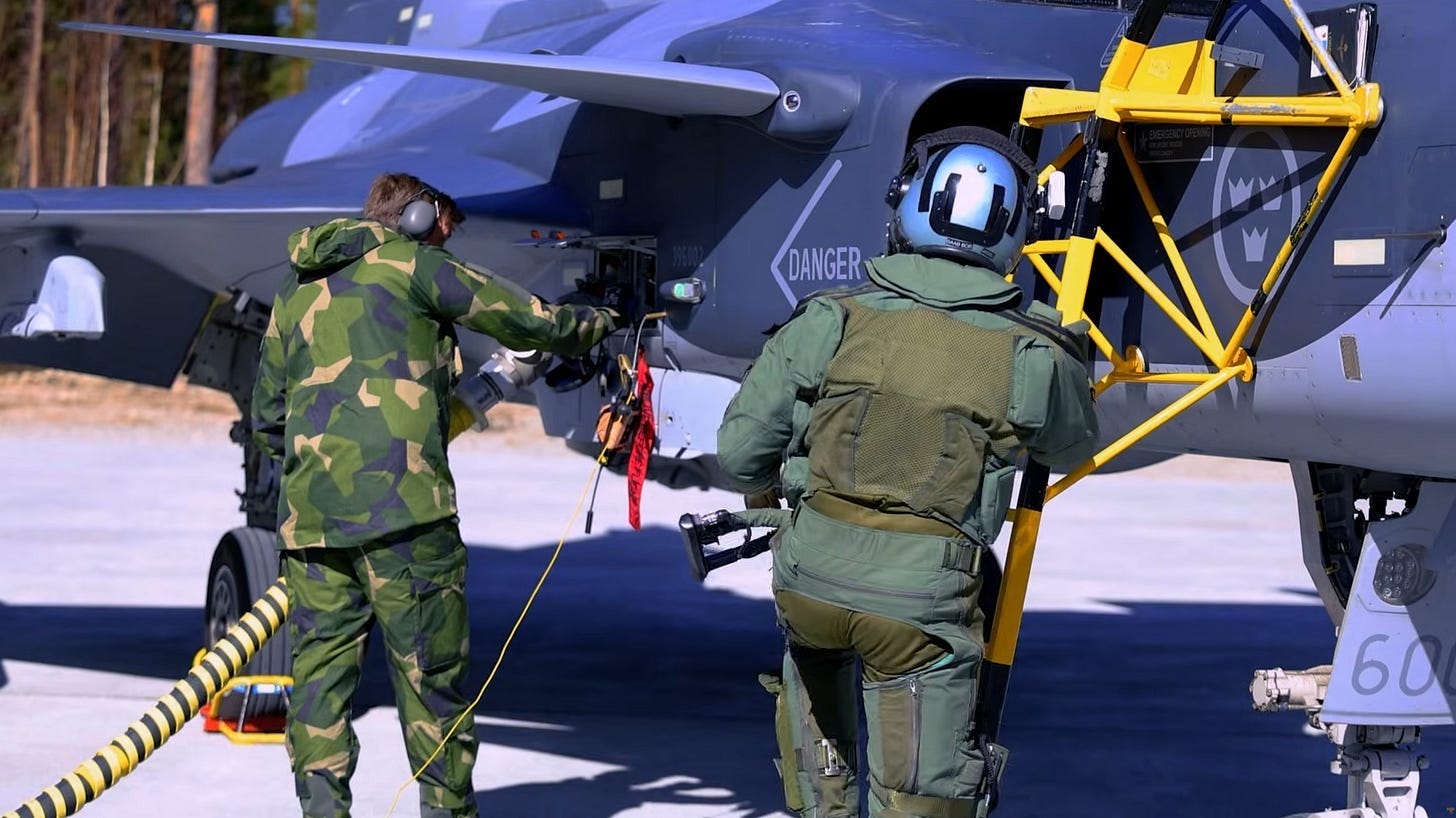
The specialized runway equipment supports Sweden’s doctrine of operating its Gripen fighters off of short runways or roads. It takes five mechanics ten minutes to refuel and rearm the Gripen for an air-to-air mission and less than an hour to change an engine. It can launch the ~200 km Meteor air-to-air missile (US AIM-120: ~180 km, Russian R-37M: 350-400 km) with a 60 km range at which an enemy fighter cannot escape. Ukrainian pilots will start training on the Gripen soon. Ukraine will buy 100 to 150 Gripen over the next 10-15 years and will receive the first jets sometime this year.
Two months ago, Ukraine started to prepare for Russian attacks on their water systems. The biggest weakness of the current systems is that there is usually one primary and one alternative water intake system, plus there is usually one primary and one alternate pump and the primary and alternate systems are often located next to one another. Repairs on water systems can take 9-10 months when the parts are available. Ukraine is ordering pumps and parts and working on decentralizing the critical components. One plan is to use mobile stations that can provide both intake and pumping along a source of water.
From December: Kyiv being attacked by ballistic missiles as seen from the space station.
Diplomacy
Poland is enlarging its 215,000 military, which is already the third largest in NATO after the US and Turkey. They are increasing their defense spending to 5% of their GDP. And they are also in the process of training 400,000 people by the end of the year in emergency preparedness. Some of the topics covered are cybersecurity, crisis preparation and emergency first aid. The course is open to schoolchildren, stay-at-home parents, full-time workers and seniors, and a 48-page emergency preparedness guide has been sent to every household. Finland, Sweden, Norway, Estonia and Lithuania are also doing some form of civil defense preparation, as well.
Fico has criticized Western aid to Ukraine, halted state-funded aid to Ukraine and threatened to cut off supplies of electricity to Ukraine as recently as March. With important trends favoring Ukraine and with Orban departing the political scene, Fico’s position is moving. He had a phone call with Zelensky and agreed that strong relations between Ukraine and Slovakia are important and that Slovakia supports Ukraine joining the EU. Fico also agreed that peace is not possible without the consent of Ukraine. They still have opposing views on war, oil, and loans, but they agree that better relations are desirable. None of this stopped Fico from traveling to Moscow to shake Putin’s hand.
Hungary returned the $82 million it seized from a Ukrainian bank that was transporting it across the country.
Equipment
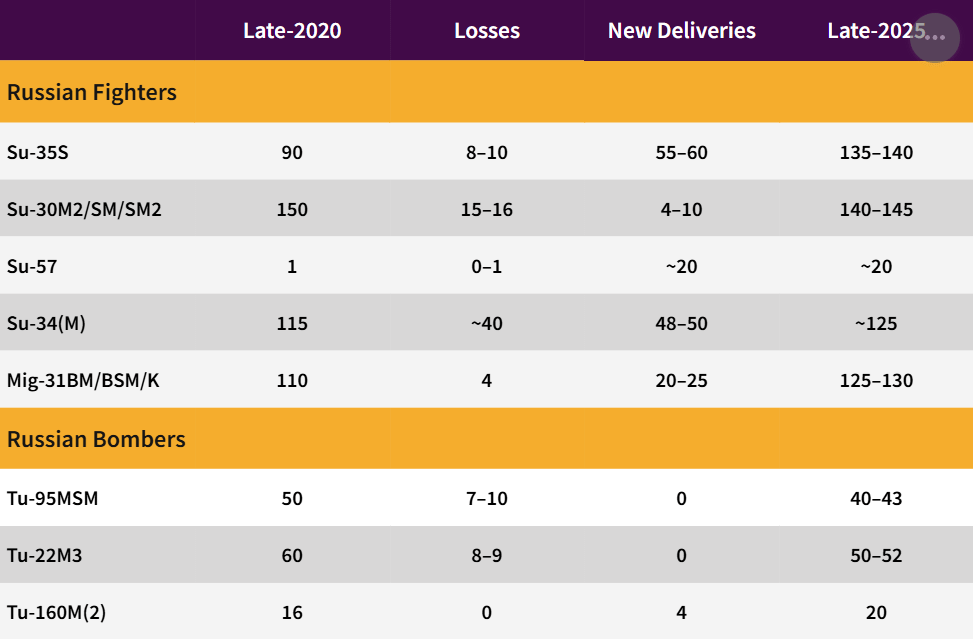
Production of Russian fighters is keeping up with its losses while its bombers have suffered about a 13% decline in numbers.
Germany delivered 9 IRIS-T air defense systems and will deliver nine more by the end of 2028. Each system currently has five launchers (3 SLM, 2 SLS). Germany will send 36 more launchers, so each system will have four (2 SLM, 2 SLS) more launchers each. SLM has a 40 km range and SLS has a 12 km range. The systems have close to a 100% accuracy rate when intercepting cruise missiles.
Ukraine’s Tryzub laser weapon is entering the final testing phase on the battlefield and will soon be produced and used against Shahed drones. FPV drones can be engaged at 900 meters, reconnaissance drones at 1500 meters and Shahed drones at 5000 meters. It is intended as a point defense weapon for infrastructure and other rear-area sites. Details of component availability and production past the prototype phase are unknown.
Defenses Against Long-Ranged Drones
UKRAINE
When Ukraine established short-range air defenses, the widespread unit mindset was that if a Russian drone flew over their sector without striking anything they would be free of blame. Teams began as stationary positions with heavy machine guns. Later, they placed the machine guns on vehicles and equipped them with searchlights. Currently, thermal cameras and night vision devices are used. Acoustic sensors, radars and reconnaissance drones collect data that is viewed on a system used by all air defenders. Point defense teams are integrated with mobile machine gun and drone interceptor teams and the mobile teams are constantly moving and avoid using the same locations repeatedly.
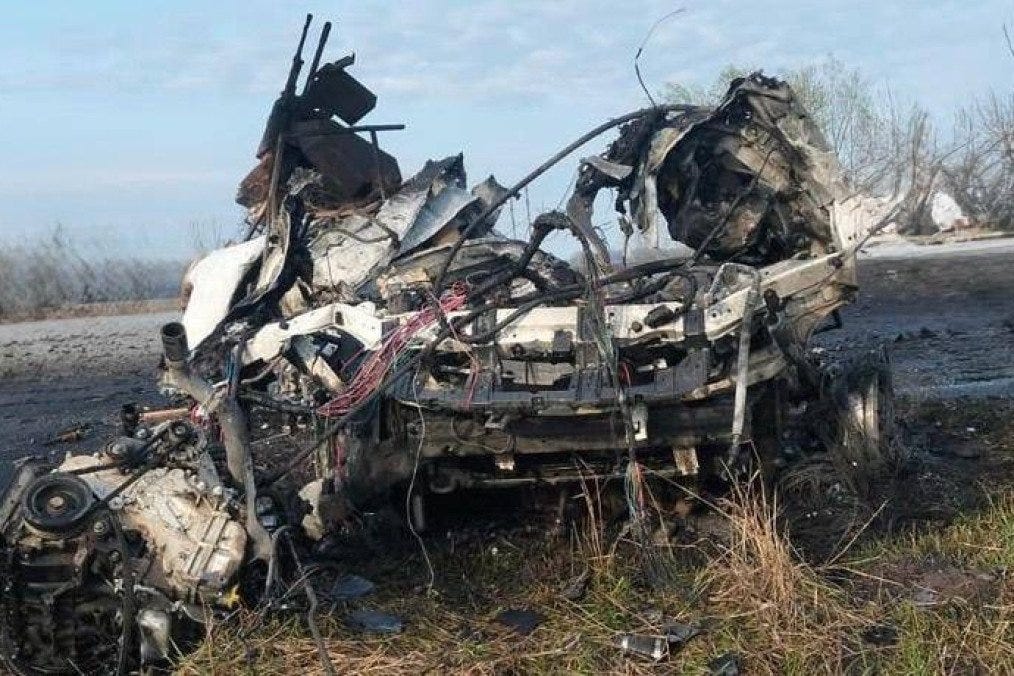
Russia started using guided Shahed drones to target Ukrainian mobile fire groups. One crew was firing on a Shahed when another Shahed attacked it and caused casualties. Serhii Beskrestnov called upon all teams to be aware of the threat and to have a plan of action if they are attacked.
Now, with improved coordination and oversight, if a drone left a unit’s sector without being shot down there is a review to find out why that happened.
If there is a deficiency on the placement of the radar, it is moved, and the success of that movement is analyzed. Sensor placement is based on science and is integrated with other components in the network. The drones themselves are studied to determine the best way to use them and which drones are more effective. And they also studied the quality of the pilot. Of all the drone operations, interception is the most difficult to teach and it can take a pilot up to six months to become effective.
In 2025, one region had 28 crews, 24 of which did not shoot down a single drone. Across the nation there were over 300 crews. 170 did not shoot down a drone, 66 shot down more than 10 drones and the rest shot down 1-9 drones throughout the year. A big reason why so many crews did not shoot down drones is that they were newly formed and didn’t have the training or equipment to be effective.
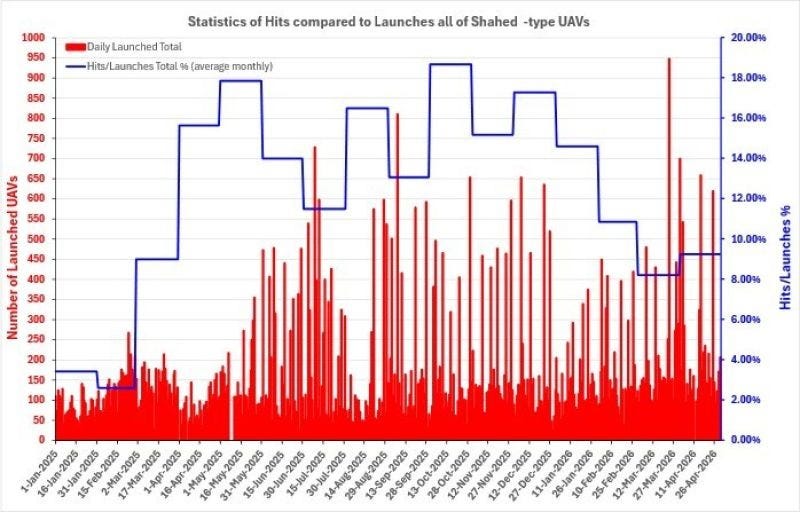
From January 2025-April 2026, the percentage of drones hitting a target decreased during 2026 until there was a slight rise in April.
Despite an increasing number of drones being launched in 2026, the percentage of drones hitting targets has generally decreased. This is because more teams were being trained to levels of competency, more equipment was available, coordination was improved, and both failures and successes were analyzed and acted upon. Also, Ukraine’s Lima EW systems have also been effective against both drones and missiles. Ukrainian aircraft, such as helicopters, prop planes and jets also provide another layer of defense. Its Mirage jets are intercepting cruise missiles and drones with a 98% success rate. (Sometimes Ukrainian jets use three different forward operating bases in a week to avoid Russian missile and drone attacks).
Russian mesh networks allow their drones to communicate data to each other without operator input. Removing one drone from the mesh network removes one sensor platform but it does not break the link to the network unless it places one or more drones out of range of networked drones. If one drone finds a path past Ukrainian defenses then other drones in that network will reroute their flight to fly along the same path. It is possible that in the next six months Russian drones will have full autonomy in assessing the operational environment and choose the safest route.
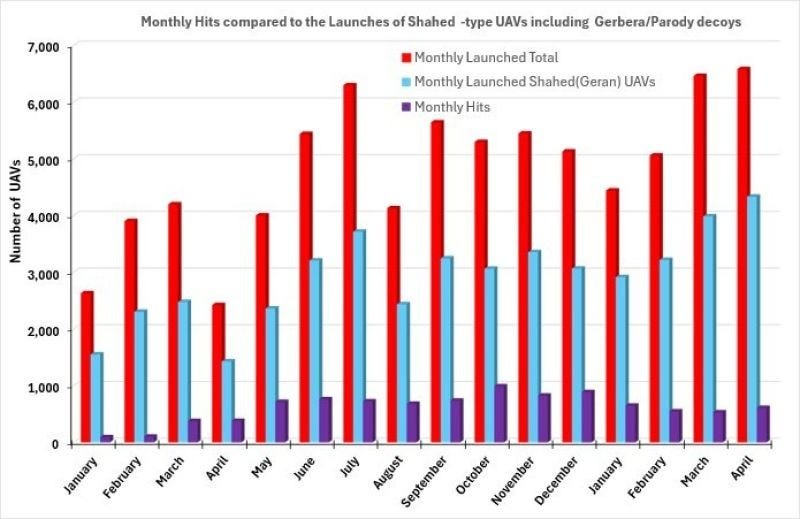
Russia has been launching more drones but the number of hits remained roughly the same.
Training interceptor pilots is one of the biggest hurdles in establishing an effective drone interceptor force. Ukraine is working to remove that hurdle by replacing pilots with autonomous AI drones. Soldiers would launch the drone and it would decide where to go and how to hit the target while being able to distinguish between friendly and enemy personnel and equipment. AI drones would also be immune from jamming. This transition could happen within six months. Even with AI, 80% of a mission’s success still depends on how the operator uses the drone given the drone’s capabilities, the enemy’s actions and the battlefield conditions.
Excluding the drone teams of the frontline units, Ukraine hoped to increase its drone personnel from 86,000 to 100,000 by the beginning of April. Robert Brovdi, the USF commander, says Ukraine now has enough drones but they need more personnel.
Automation is increasing on the ground, as well. The 3rd Corps plans to replace a third of its infantry with ground and aerial drones in the near future and a commander in the 12th Azov Brigade says that some places have no infantry but are being defended by drones, artillery and mines.
Russia
Conventional Russian air defenses are being destroyed faster than they can be built, and missiles are being expended faster than they can be replaced. There is nothing to indicate this trend will change, which makes Russia’s factories and infrastructure increasingly vulnerable. Russia’s only hope is to replicate Ukraine’s drone interception teams.
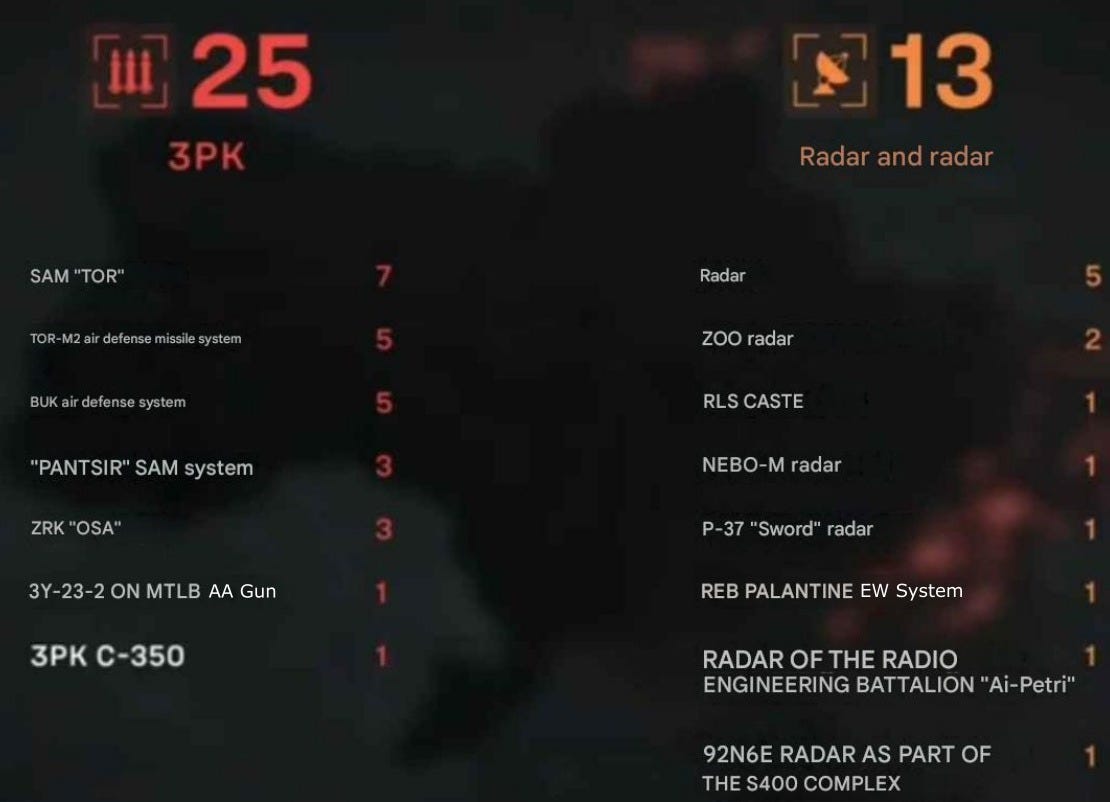
Russia lost 38 air defense components in April, which is an unsustainable rate of loss.
Russia is expanding the number of personnel in its Unmanned Systems Forces from 131,000 to 210,000 and will create almost 1,000 units with this force. 58,000 are supposed to come from university students, aviation unit veterans and female recruits. The rest are drawn from conscripts and active duty personnel being converted to contract status. 32 universities are now teaching drone operator training. Civilian drone pilots, electronic gamers, and those with experience in aviation or special forces are in demand. The contract would be for a minimum of one year, including two months of training, but Russia has a history of not honoring contracts.
They plan to increase reconnaissance crews by 12%, strike teams by 10%, ground and naval crews by 100% and drone interceptor units by 270%.
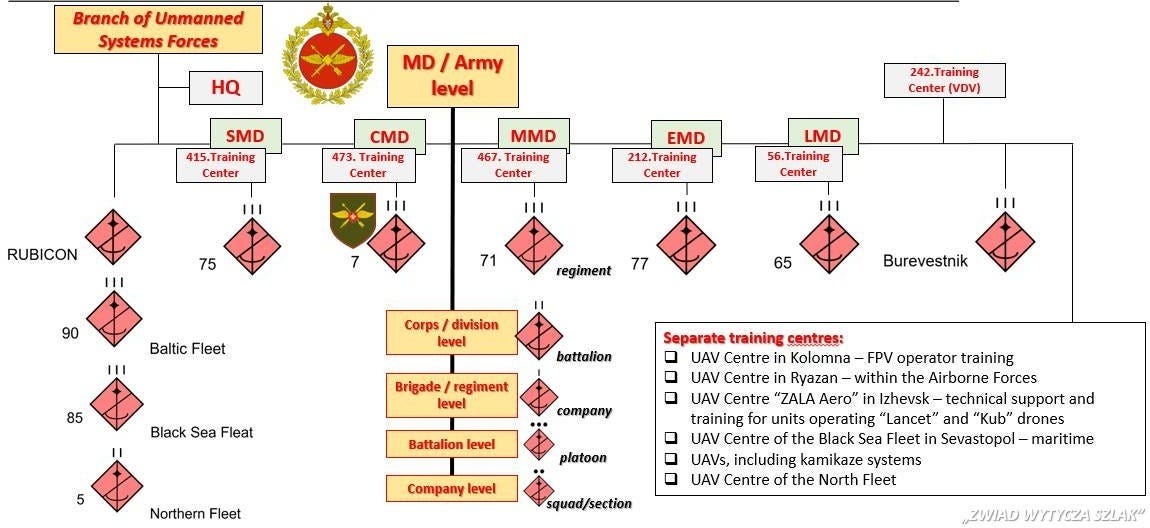
In addition to the organizations shown here, 27 more brigades and regiments are planned, and each Combined Arms Army will have a battalion.
There have been some obstacles, such as a $900 million funding shortfall during the 2025-2026 phase of the drone force build up. And the 79,000 personnel that are planned for the drone forces are competing with the needs for infantry, which is struggling to keep up with its losses.
Other challenges include establishing a sensor network to detect Ukraine’s drones. Russia doesn’t use acoustic sensors so they have to rely entirely on radars, which are one of the components of Russia’s air defense system that Ukraine is eliminating. Fewer radars mean more gaps that Ukraine can identify and fly through, especially when terrain is taken into account.
And then, if Ukrainian drones are detected, the information needs to be communicated to all the Russian air defense units. Ukraine has Delta, which collects all the data and provides the location, speed and altitude in real time to its units. Delta was successfully used in 2022 and adopted across the military in August 2025.
Russian units had been using Discord for coordination, messaging and voice communication, and, as of February, were still using it. In March, there was a directive to stop using Telegram, Discord, and other apps and to use the state-built MAX messenger app.
In January 2025, Russia rolled out the Glaz/Groza system. It performs many of the same functions of Ukraine’s Kropyva system which has been in use since 2014. Glaz (“Eye”) takes video feed from drones and turns identified targets into digital coordinates for mortars, artillery, rocket artillery and tanks acting as artillery. Groza (“Thunderstorm”) processes the data from Glaz and calculates the data needed to fire a particular weapon, taking altitude and weather conditions into account. Once a drone has detected a target it can be engaged within 2-4 minutes.
Glaz/Groza is a tactical tool and ASTRAS is a strategic tool that consolidates video feeds into one interface, similar to Ukraine’s Delta tool. ASTRAS was first spotted in November 2025 in the headquarters of the Center Group of Forces in the Pokrovsk area. This was also the first headquarters to use Svod, which was just completed in December 2025.
Svod is an AI-enabled battlefield management system that aggregates data from satellites, aerial reconnaissance, intelligence reports and open sources to provide a single operational picture. Electronic warfare and disrupted communications could limit its effectiveness.
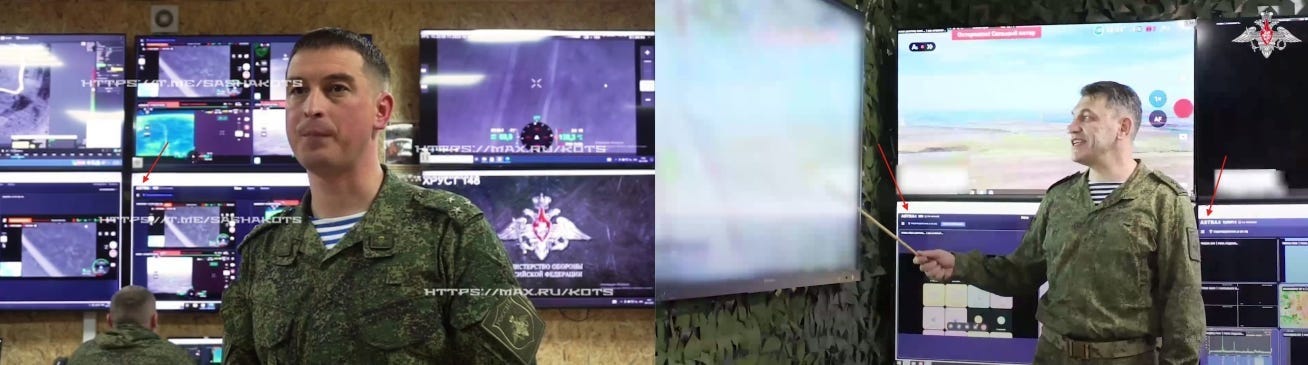
Based on released images, ASTRAS seems to have an instant messenger interface and likely supports text chats, voice communication and may include file sharing.
Russia’s Center Group may be the test bed to implement these new data systems or they may already be implemented in other units. The effectiveness of these systems is unknown but it is likely to improve over time. The radar sensors and the ability to efficiently move that data to command centers and the air defenders is key to Russia’s ability to use drone interception teams and mobile gun teams. Without that capability, the drone and gun teams are no more than point defense systems scattered throughout the battlefield: They’ll be able to attack a Ukrainian drone if it flies over them and they detect it, but they won’t be able to move into its path.
Russia is establishing more mobile fire groups in the Leningrad region, and they will be just point defense systems trying to make up for all the air defense systems that were moved out of that region earlier.
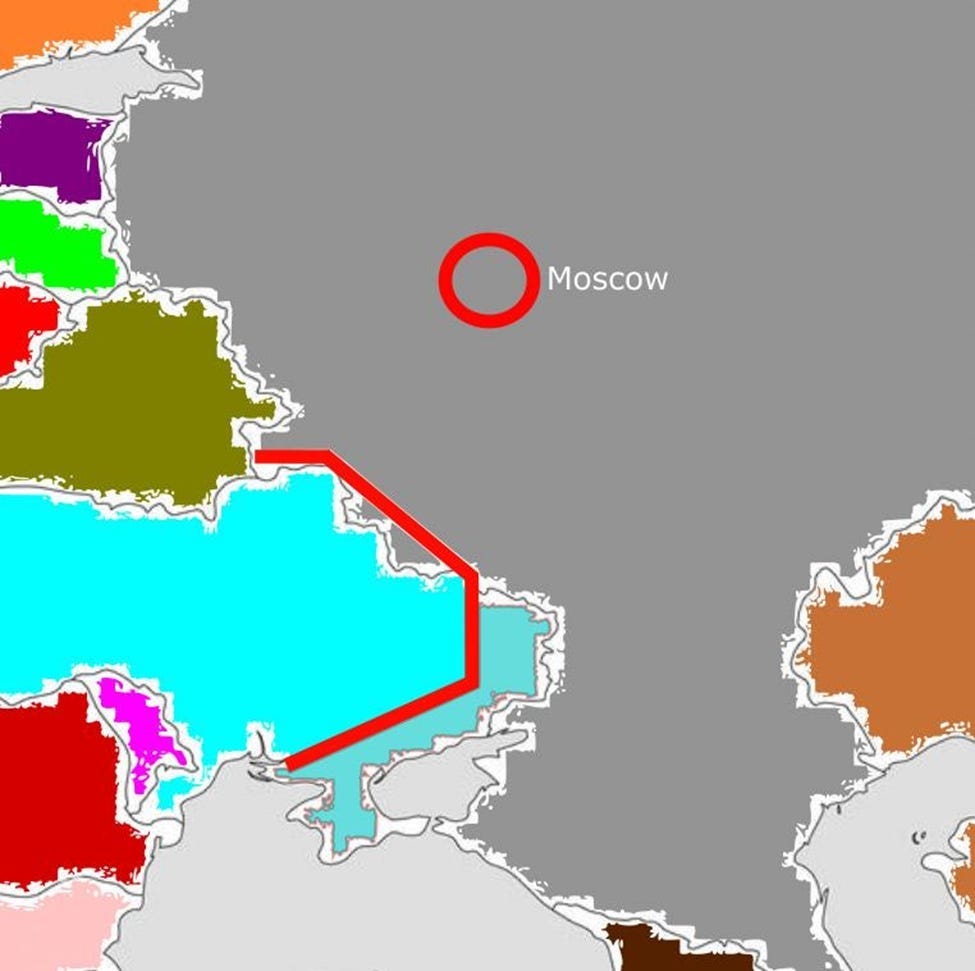
Besides the personnel issues, the destruction of radars and the need to establish an effective command and control system, Russia is fighting its own geography. Russia is a big country, and the narrowest place to detect and intercept long-ranged Ukrainian drones is along the front lines. That is also where Russian radars, command centers and air defense teams are most vulnerable to Ukrainian attacks. If Russia pulls its defenses further to the rear, they will have to cover more ground and there will be more gaps. There are various point defenses scattered throughout Russia but the only other densely guarded location is the Moscow region.
If Russia overcomes the funding, personnel, sensor destruction, command and control and geography challenges they will be able to increase their interception of Ukraine’s long-ranged drones to some degree, but they are unlikely to be entirely successful. Ukraine is launching an increasing number of drones all at once over just a few flight routes, and the number of drones overwhelm local defenses along that flight path. And that is just Ukraine’s long-ranged drone threat.
If Ukraine’s cruise missiles become effective with higher numbers being deployed and with more accurate navigation, Russian interceptor drones will not be effective against them. That task would be reserved for Russia’s diminishing surface-to-air missile systems. So far, Ukrainian cruise missiles have had very limited success, so that possibility still lies in the future.
If Ukraine’s ballistic missiles are activated this year and prove to be accurate and are produced in significant numbers, Russia does not have a hit-to-kill missile that is needed to successfully stop a heavy ballistic missile. Ukraine’s FP-7 (200 km) and FP-9 (400 km) are both lighter missiles and one estimate is that an S-400 missile would only have a 25% chance to intercept them. This is all speculation at this point in time.
Ukraine is containing the Russian drone threat at current levels of damage while Russia is currently unable to stop Ukraine from increasing its level of damage. Ukraine’s long-ranged strikes are likely to have a greater impact on Russia’s ability to conduct a war in the near future.
Both sides continue to adapt and innovate. Ukraine created an advantage in the long-ranged attacks and they need to continue to press that advantage at a faster rate than Russia can adapt to it.
Thanks Donald, a very interesting and detailed post
Excellent detail Don, a lot in this one, that has informed about 3 of my pending articles. Really appreciated 👍